 Save to Pinterest
 I discovered bulgogi during a late-night cooking session when my roommate brought home a container of it, steam still rising from the lid, and I couldn't stop eating it straight from the box. The way the beef glistened with that glossy marinade, sweet and savory all at once, made me obsessed with recreating it at home. What started as copying a restaurant dish became my go-to weeknight meal because it proved you didn't need fancy techniques to make something that tasted like real restaurant quality. Now when I make it, the smell of beef hitting a hot wok brings back that same excitement I felt that first time.
I made this for my friend who swore she couldn't cook Korean food, and watching her face when she tasted how easy it was to nail those caramelized edges on the beef—that was priceless. She's made it maybe twenty times since then, each time tweaking it slightly, and it became the thing she'd bring to potlucks. Food has this weird power to build confidence, and I've watched this dish do that for people who thought cooking was too intimidating.
Ingredients
- Beef sirloin or ribeye, thinly sliced: The thinner you slice it, the faster it cooks and the better it soaks up that marinade—a sharp knife or partially frozen beef makes this almost effortless.
- Soy sauce: This is your umami backbone, so don't skip it even if you think it'll be too salty, because the sweetness balances it perfectly.
- Brown sugar: Creates that signature gloss and subtle caramelization that makes you think you spent hours on this.
- Sesame oil: Just a tablespoon is enough to add that toasted, nutty depth that screams Korean food.
- Rice vinegar: Cuts through the richness and keeps the flavors from feeling heavy.
- Garlic and ginger: Minced garlic dissolves into the marinade, while ginger adds a subtle warmth that lingers on your palate.
- Grated pear or apple: This sounds weird until you taste it, then you understand why it's non-negotiable—it adds sweetness and acts as a natural tenderizer.
- Gochujang: Optional, but this is where you add heat if you want it, and it's forgiving about how much you use.
- Scallions and sesame seeds: Both raw and toasted versions matter—they add texture and brightness that finish the dish perfectly.
- Jasmine or short-grain rice: The starch helps catch all those precious bits of marinade that run off the beef.
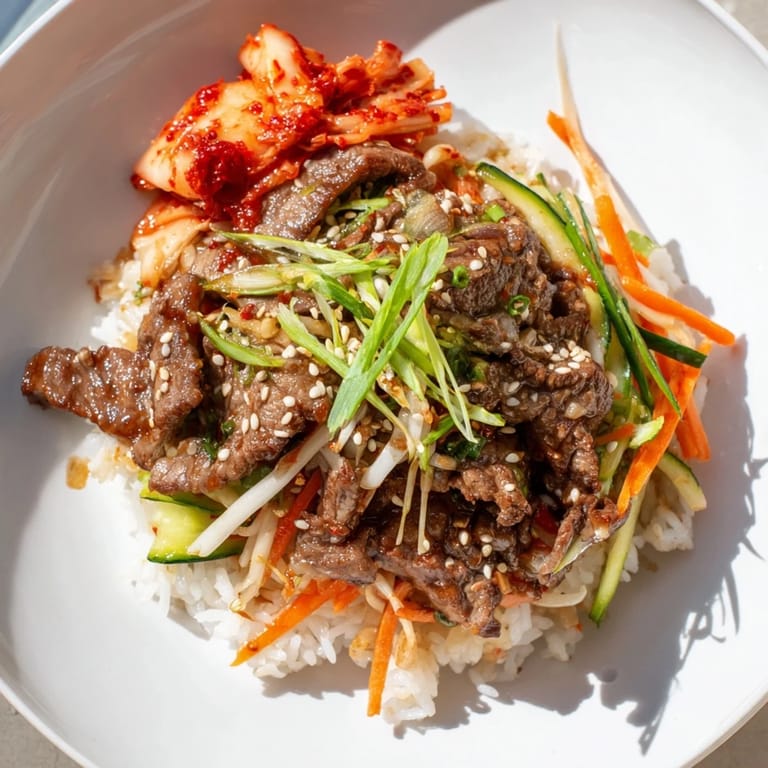
- Vegetables for assembly: Carrots, cucumber, bean sprouts, and kimchi are your canvas for color and crunch, keeping each bite from feeling one-dimensional.
Tired of Takeout? 🥡
Get 10 meals you can make faster than delivery arrives. Seriously.
One email. No spam. Unsubscribe anytime.
Instructions
- Build the marinade:
- Combine soy sauce, brown sugar, sesame oil, rice vinegar, minced garlic, grated ginger, grated pear, gochujang if using, half the scallions, sesame seeds, and black pepper in a bowl and stir until the sugar dissolves. You want everything to smell irresistible at this point—if it doesn't, your palate is probably telling you it needs more of something.
- Marinate the beef:
- Add your thinly sliced beef to the mixture, toss until every piece glistens with marinade, cover it, and let it sit for at least 15 minutes. I usually do this while I prep my vegetables or cook rice, so nothing feels rushed.
- Sear the beef:
- Heat your skillet or wok until it's screaming hot, then add the beef in a single layer if possible, letting it sit undisturbed for about a minute to develop those caramelized edges before you start stirring. Work in batches if your pan isn't huge—crowding it will steam the beef instead of searing it, and that's the difference between average and amazing.
- Assemble the bowls:
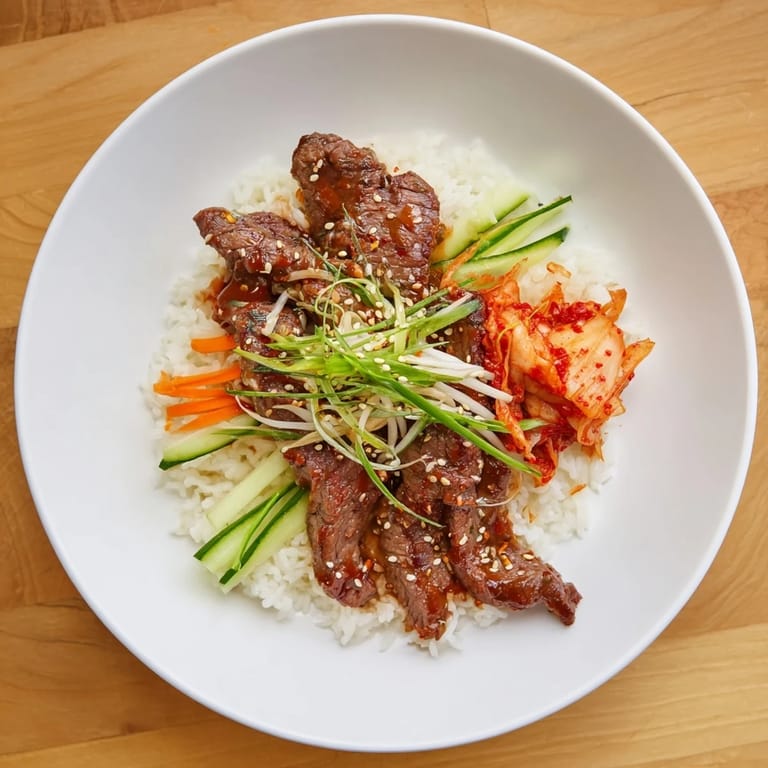
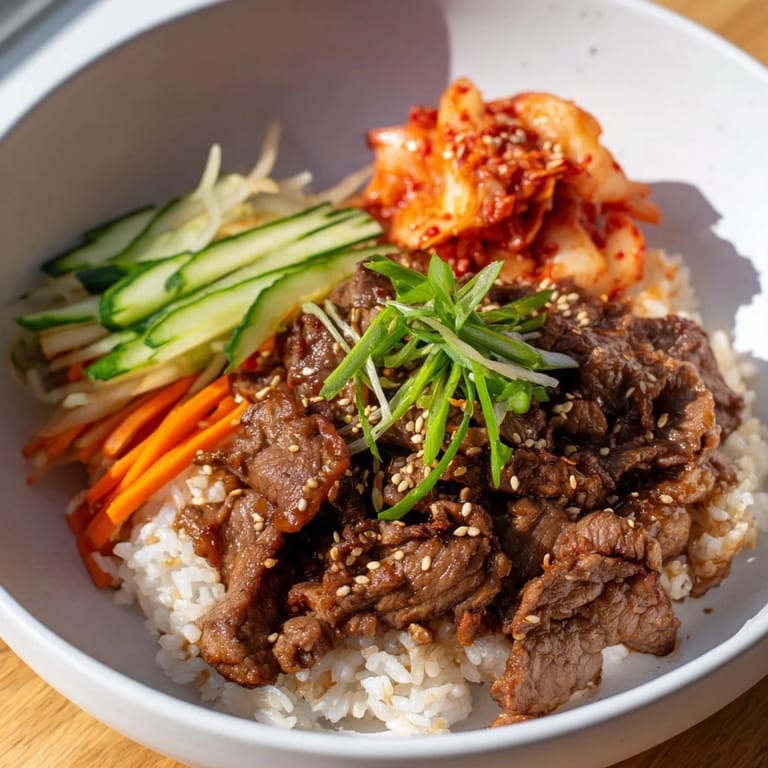
- Divide your rice among bowls, arrange the warm beef and all your prepped vegetables on top in whatever pattern makes you happy. The visual appeal here is half the pleasure.
- Finish and serve:
- Scatter your remaining raw scallions and toasted sesame seeds across everything and serve immediately while the beef is still warm and the vegetables still have some crunch to them.
 Save to Pinterest
 The first time someone asked me for the recipe and I realized I'd been making it so often I could recite it from memory, that's when it clicked that this had become more than just dinner—it was comfort food I'd learned to make my own. There's something about feeding people something you've created that shifts the whole meaning of a meal.
Why This Marinade Works
The genius of this marinade is that it's not trying to be precious—it's doing four things at once and doing them all well. The soy sauce and brown sugar are the obvious duo, but the pear is the secret that nobody talks about, working as both sweetness and tenderizer in a way that no amount of extra marinating time could replicate. The sesame oil shows up last just to add that finishing touch of aroma, and the ginger and garlic make sure it never tastes one-dimensional.
Building Your Perfect Bowl
The vegetables aren't decoration here—they're the contrast that makes every bite interesting. The cool crispness of cucumber against warm beef, the slight earthiness of blanched bean sprouts, the brightness of raw carrot—these aren't random choices, they're the reason you'll want to eat this again tomorrow. Some nights I add kimchi because I want heat and funk, other times I skip it because I want the vegetables to stay the star.
Variations That Change Everything
This dish is almost impossible to mess up once you understand the core technique, and there are a dozen directions you can take it. I've had nights where I've added a fried egg because I wanted richness, or substituted cauliflower rice because I was in a different mood that day. Some friends swear by adding a splash of gochujang right before serving instead of in the marinade, which gives you more control over the heat level and keeps things fresher tasting.
- A soft-boiled or fried egg on top adds richness and creates a luxe weeknight dinner.
- Swap regular rice for cauliflower rice if you want to lighten it, and honestly, the beef is rich enough that the swap barely registers as a compromise.
- Make extra marinade and use it as a dipping sauce or to drizzle on top just before eating.
 Save to Pinterest
 This dish taught me that sometimes the most satisfying meals are the ones where technique stays simple and ingredients do the talking. It's the kind of food that makes you feel like you can cook, even if you've never thought of yourself that way.
Recipe FAQs
- → What cut of beef works best for Bulgogi?
Thinly sliced ribeye or sirloin are ideal for their tenderness and quick cooking time, ensuring a juicy texture.
- → How does Asian pear affect the marinade?
Grated Asian pear adds natural sweetness and helps tenderize the beef, enhancing flavor and texture.
- → Can I substitute the rice for a low-carb option?
Cauliflower rice is a great low-carb alternative, providing a similar base without added carbohydrates.
- → How long should the beef marinate for best flavor?
Marinating for at least 15 minutes allows the flavors to infuse, while up to an hour deepens tenderness and taste.
- → What vegetables complement this dish?
Crisp carrots, cucumber matchsticks, and blanched bean sprouts add fresh texture and balance to the rich beef.
- → Is gochujang necessary in the marinade?
Gochujang adds a spicy kick but is optional; adjusting or omitting it tailor the heat level to preference.