 Save to Pinterest
 The first time I made matcha at home, I whisked it all wrong—too tentative, too afraid of making a mess. My friend, who'd spent time in Kyoto, watched me struggle and gently took the whisk, showing me how to move with confidence, how the powder needs that vigorous motion to wake up and bloom into something luminous. Now, whenever I prepare this creamy matcha latte, I think of that moment: how a simple drink became a small ritual, a way to slow down before the day rushes in.
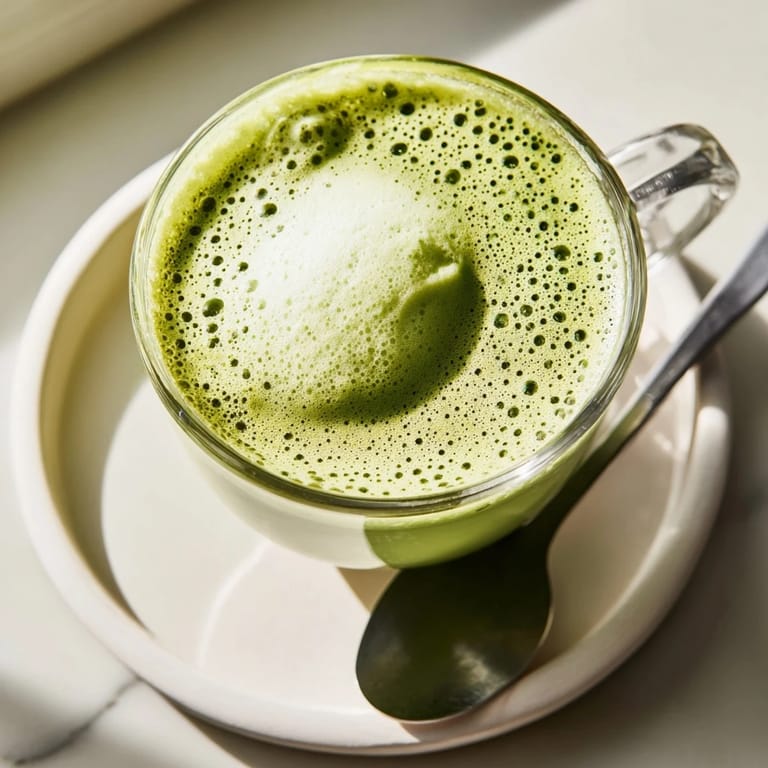
I made this for my neighbor one quiet Sunday morning, and she stood in my kitchen, cradling the warm mug while the foam slowly sank, asking what was in it like it was some kind of magic potion. There's something about matcha—the color alone stops people mid-conversation. Since then, whenever someone visits early, this is what I make.
Ingredients
- High-quality matcha powder: This is where everything starts—cheap matcha tastes grassy and bitter, but good matcha tastes almost sweet and creamy on its own, so don't skip on this.
- Hot water (80°C/175°F): Water that's too hot scorches the matcha and turns it harsh; too cool and it won't dissolve properly, so if you have a thermometer, use it.
- Milk of choice: Whole milk creates the richest flavor, but oat milk froths beautifully and adds a subtle sweetness that feels natural.
- Cold milk for foam: Barista-style plant milks froth better than regular ones because they contain stabilizers; if you're using dairy, cold whole milk gives the silkiest texture.
- Granulated sugar or simple syrup: Syrup dissolves instantly into cold milk, but sugar works fine if you whisk it long enough to incorporate.
Tired of Takeout? 🥡
Get 10 meals you can make faster than delivery arrives. Seriously.
One email. No spam. Unsubscribe anytime.
Instructions
- Sift your matcha:
- Pour the matcha powder through a fine sieve into a bowl or mug, pushing any stubborn bits through with the back of a spoon. This takes 30 seconds but prevents grainy clumps that feel disappointing in every sip.
- Whisk it alive:
- Add the hot water and whisk in quick, figure-eight motions with a bamboo whisk (or a small frother if that's what you have) until the powder transforms into a bright, frothy paste. You'll hear the whisks moving fast and see the matcha slowly turn from a thin mud into something airy and luminous.
- Warm your milk:
- Heat the milk gently in a small saucepan or microwave—if you see steam rising, you've gone far enough, and steam rising means it's hot enough. Pour it slowly into the matcha, stirring gently so the two become one smooth, silky green liquid.
- Make cold foam magic:
- Pour cold milk and sugar into a frothing pitcher or a clean jar with a tight lid. If using a frother, turn it on and watch as the milk doubles in volume and turns glossy white; if using a jar, screw the lid tight and shake like you mean it for about 30 seconds until it froths up.
- Build your drink:
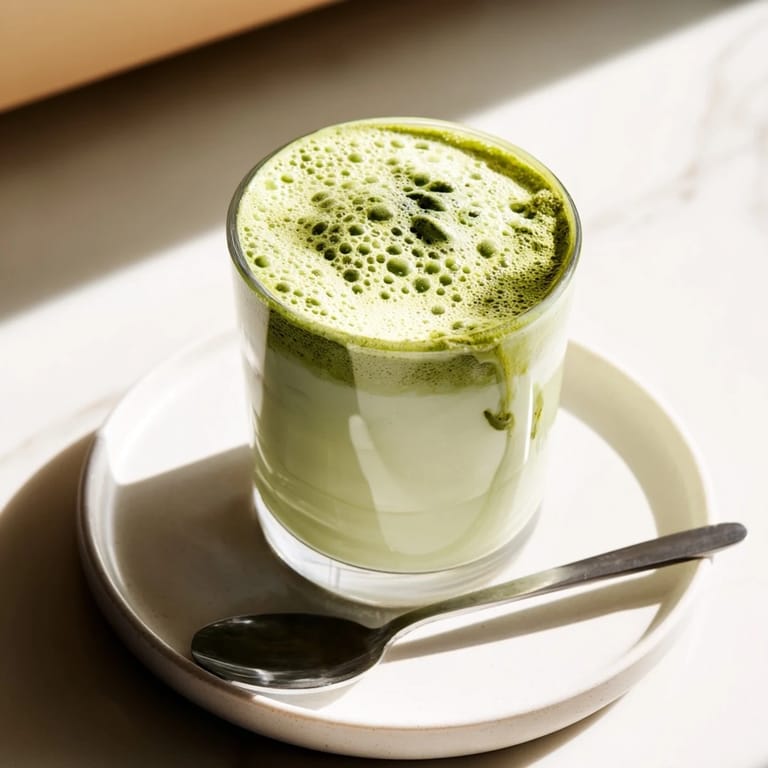
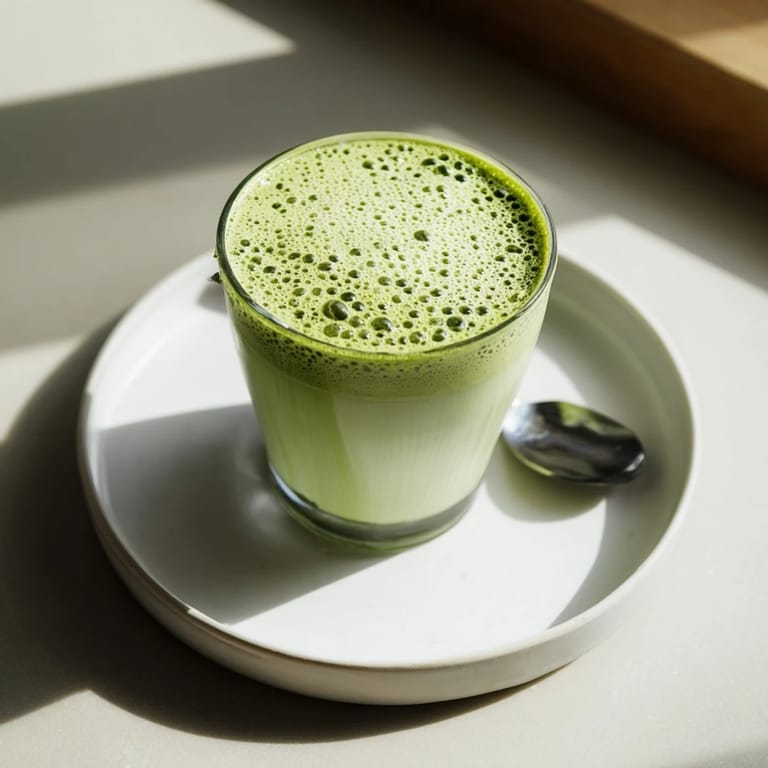
- Pour the matcha latte into a glass over ice (if using), then spoon the cold foam generously over the top so it floats like a cloud.
- Serve right away:
- The contrast between warm and cold is part of the magic, so drink it before the foam melts completely into the latte.
 Save to Pinterest
 Last week, my daughter asked why matcha is green, and I realized I'd never really thought about it until she asked. We looked it up together, learned about how it's grown in shade to boost chlorophyll, and suddenly this simple drink became a small window into something bigger. Now when I make it, I think about that conversation, about how curiosity can turn a morning ritual into a moment of connection.
The Story Behind Matcha
Matcha isn't new, but the way we drink it in the West often is. The traditional ceremonial version is whisked in a completely different way, with a specific meditation to it, whereas this creamy latte feels more modern and approachable—less ritual, more comfort. I like that it borrows the elegance of matcha without demanding perfection; it's matcha for people who want the experience without the ceremony.
Variations to Try
Once you nail the basic version, the door opens to small experiments. Some mornings I add a touch of honey or vanilla, other times I make it with cooled milk and ice to drink it cold all the way through. My friend swears by a tiny pinch of sea salt, which somehow makes the matcha taste more matcha-like, deeper and less one-dimensional.
Timing and Serving Tips
The beauty of this drink is its speed—10 minutes from craving to cup means you can actually make it on a regular morning, not just weekends. The foam sits best for about a minute after you pour it, so take that moment to breathe before you sip.
- If you're making this for guests, prepare the foam last so it's fresh and airy when they drink it.
- A small sprinkle of extra matcha powder or a dusting of cinnamon on the foam looks beautiful and tastes like a tiny surprise.
- Keep your matcha in an airtight container away from light, and it'll stay vibrant and fresh for months.
 Save to Pinterest
 This drink has a way of turning ordinary mornings into something quieter, more intentional. I hope it does the same for you.
Recipe FAQs
- → What type of milk works best for cold foam?
Whole milk or barista-style plant-based milks like oat or almond are ideal for frothing into silky cold foam.
- → How can I avoid lumps in the matcha base?
Sifting the matcha powder before whisking and using a bamboo whisk or small frother helps achieve a smooth, lump-free mixture.
- → Can I make this beverage vegan?
Yes, opt for plant-based milks such as oat, soy, or almond for both the latte base and the cold foam.
- → What is the ideal water temperature for whisking matcha?
Use hot water around 80°C (175°F) to preserve the delicate flavor without bitterness.
- → How do I sweeten the cold foam?
Adding granulated sugar or simple syrup before frothing ensures the foam is lightly sweet and silky.
- → Is it possible to add ice to this drink?
Yes, adding ice cubes creates a chilled version, perfect for warm days.