 Save to Pinterest
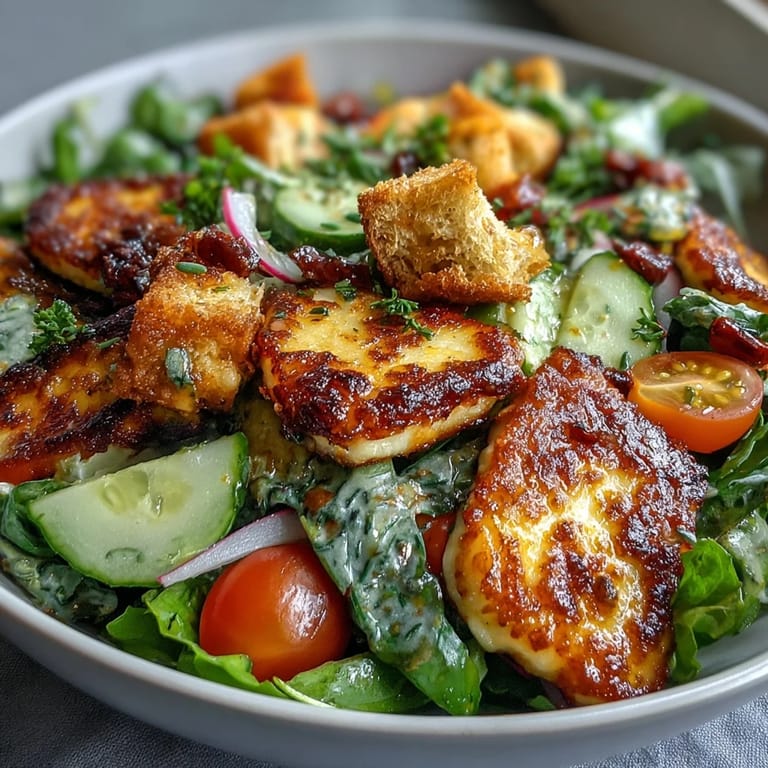
 I discovered this salad on a sun-soaked afternoon at a small market in Beirut, where a vendor was frying halloumi so golden it practically glowed, then tossing it into a mess of vibrant greens and blood orange slices. The combination felt almost absurd at first—warm cheese against tart citrus, crispy bread croutons softening just enough to catch the dressing—but it worked like magic. Now whenever I make it, that first bite takes me back to that dusty corner, the sound of sizzling cheese, and the realization that sometimes the best meals are the ones that shouldn't work but absolutely do.
Last spring I made this for a dinner party where my friend Emma brought her new partner, and I remember the moment they took that first forkful—their eyes actually widened. The combination of warm cheese, cold salad, and that pomegranate molasses tang just seemed to click for everyone, and suddenly we weren't just eating salad, we were having this shared moment of deliciousness. It became the dish everyone asked me to bring to gatherings after that.
Ingredients
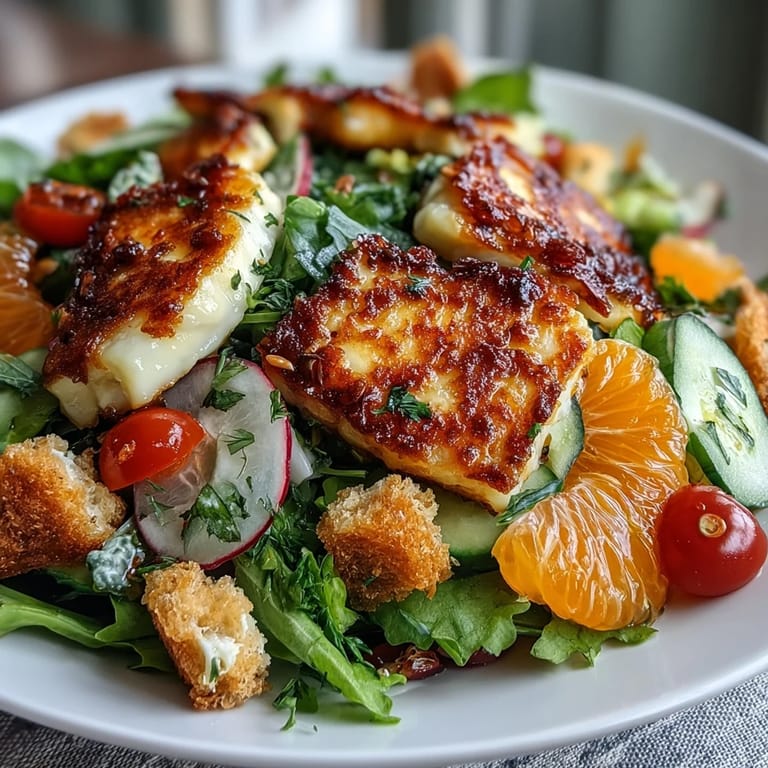
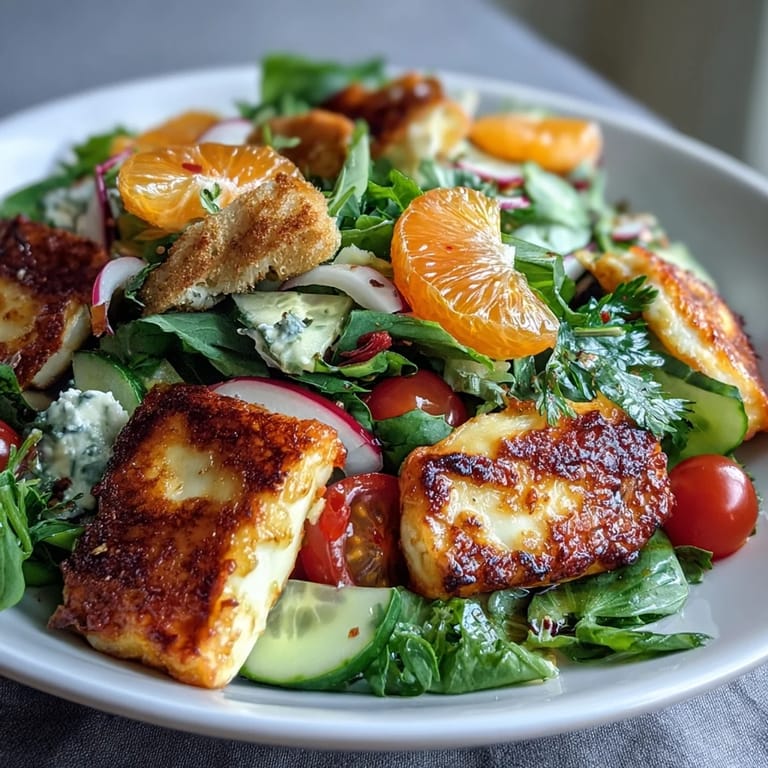
- Halloumi cheese, 200g sliced into 1 cm pieces: This is the star—it has a high melting point which means it gets gorgeously golden in the pan without turning into a puddle, and the squeaky texture against your teeth is oddly satisfying.
- Blood oranges, 2 peeled and segmented: The deep crimson color and complex flavor make this salad look like jewels scattered across green, and they're worth seeking out because regular oranges taste one-dimensional by comparison.
- Mixed salad greens 150g (romaine, arugula, parsley, mint): The mix matters more than you'd think—parsley and mint add an herbaceous freshness that transforms this from a simple salad into something with real personality.
- Cucumber, 1 small diced: Beyond just being crisp, it adds a cooling element that tempers the richness of the fried cheese beautifully.
- Cherry tomatoes, 8 halved: Summer's sweetness in every bite, and halving them instead of quartering means they stay intact longer.
- Red onion, ½ small thinly sliced: The bite of raw onion is crucial—it cuts through the richness and adds a sharp note that makes everything taste more alive.
- Radishes, 2 thinly sliced: They bring peppery crunch and won't go soggy even if you make this slightly ahead of time.
- Sourdough bread, 2 thick slices cut into cubes: Sourdough's tanginess complements the sumac dressing in ways white bread never could.
- Olive oil, 2 tbsp for croutons plus 3 tbsp for dressing: Use a good quality extra virgin oil in the dressing where its flavor shines, and save regular olive oil for crisping the bread.
- Pomegranate molasses, 1½ tbsp: This ingredient is the secret ingredient that makes people ask what's in your dressing—it's tart and slightly sweet with an almost wine-like depth.
- Sumac, 1 tsp: If you've never cooked with sumac, this recipe is your introduction to the tangy, lemony spice that tastes faintly reminiscent of berries and transforms everything it touches.
- Lemon juice, fresh 1½ tbsp: Fresh lemon brightens the entire dish and keeps everything tasting vibrant rather than heavy.
- Sea salt and black pepper to taste: Don't skip seasoning the croutons properly—it's the difference between them tasting like bread and tasting like a deliberate component of the salad.
Tired of Takeout? 🥡
Get 10 meals you can make faster than delivery arrives. Seriously.
One email. No spam. Unsubscribe anytime.
Instructions
- Make the croutons while the oven preheats:
- Preheat your oven to 200°C (400°F), then toss your sourdough cubes with olive oil and sea salt, making sure every piece gets a light coating. Spread them on a baking tray in a single layer so they toast evenly rather than steam, and let them go for 8–10 minutes until they're golden on the outside but still have a tiny bit of give in the center—they'll crisp up more as they cool, and stale croutons are a tragedy.
- Fry the halloumi until the edges turn golden:
- Get your non-stick skillet to medium heat, then lay the halloumi slices in there without crowding the pan—you want sizzle, not steam. Cook for 2–3 minutes per side until each piece has golden-brown edges and a slight char, which means the exterior has caramelized just enough to add complexity.
- Build your salad base:
- In a large bowl, toss together your mixed greens, cucumber, cherry tomatoes, red onion, radishes, and blood orange segments, doing this gently so you don't bruise the delicate leaves or break apart the orange segments. Don't dress it yet—the greens will start to wilt if you do.
- Whisk the dressing until it emulsifies:
- In a small bowl, combine your extra virgin olive oil, fresh lemon juice, pomegranate molasses, sumac, black pepper, and sea salt, then whisk it together vigorously until it becomes slightly thickened and creamy-looking. This whisking matters because it helps the flavors blend and creates a more cohesive dressing.
- Bring everything together:
- Add the still-warm fried halloumi and the crispy croutons to your salad bowl, drizzle generously with dressing, and toss everything together gently so the warm cheese mingles with the cool greens. Serve immediately while the halloumi is still warm and the contrast between temperatures is at its peak.
 Save to Pinterest
 There's something almost magical about the moment when warm cheese meets cold salad and everyone at the table actually pauses their conversation to pay attention to what they're eating. That's when you know you've made something worth remembering.
Understanding Sumac: The Ingredient That Changes Everything
Sumac was completely foreign to me until I took a cooking class at a small Middle Eastern restaurant, and the chef explained that it's made from dried berries and brings tartness without acidity like lemon or vinegar would. Once I started using it, I understood why it's so beloved in Levantine cooking—it adds complexity and makes people taste your food differently, asking "what is that?" before you tell them it's sumac and they suddenly want to buy a jar. If your local grocery store doesn't carry it, Middle Eastern markets almost always do, and it keeps indefinitely in your pantry, waiting to transform whatever you're making.
Why Blood Oranges Matter Here
I once tried making this with regular navel oranges when blood oranges were out of season, thinking they'd be perfectly fine, and the salad tasted... fine, which is exactly the problem. Blood oranges have this subtle bitterness and deeper flavor that plays beautifully against the savory cheese and herbaceous greens, creating layers of taste instead of just sweetness. If blood oranges truly aren't available, pink grapefruit or Seville oranges are your next best bets, but it's worth waiting for the real thing when they're in season because that's when this salad becomes something truly special.
Customization Ideas and Make-Ahead Strategy
I've found that the components of this salad are actually quite forgiving if you're entertaining and need to get organized—you can make the croutons hours ahead and store them in an airtight container, and you can prep all your vegetables and keep them refrigerated until you're ready to assemble. The one thing you truly cannot do ahead is combine everything with the dressing, because those tender greens need to stay crisp, but knowing that you can prep 80% of the work beforehand makes this salad far less stressful for dinner parties.
- Toast some pistachios or walnuts and scatter them over the top for extra crunch and nuttiness that plays beautifully with the sumac.
- Add pomegranate seeds along with the blood orange segments for additional tartness and visual drama with those jewel-like arils.
- If you find yourself with leftover dressing, it's phenomenal drizzled over grilled vegetables or used to dress a grain salad the next day.
 Save to Pinterest
 This salad has quietly become one of those dishes that bridges seasons and moods—light enough for warm weather but substantial enough to feel satisfying when you're craving something more than just greens. Every time I make it, I'm reminded that the best recipes are the ones that taste like they're celebrating something, and that's exactly what this one does.
Recipe FAQs
- → Can I use regular oranges instead of blood oranges?
Yes, regular oranges or even pink grapefruit work well as substitutes. They'll provide similar sweetness and acidity, though blood oranges offer a unique color and slightly more complex flavor profile.
- → How do I prevent halloumi from becoming rubbery?
Don't overcook the halloumi—2-3 minutes per side is perfect. Use medium heat and avoid crowding the pan. The cheese should be golden and slightly springy, not tough or chewy.
- → Can I make the croutons ahead of time?
Absolutely. Bake the croutons up to 2 days in advance and store in an airtight container. They'll stay crispy and ready to toss into your salad when needed.
- → What can I substitute for pomegranate molasses?
You can use equal parts balsamic glaze or reduce pomegranate juice with a touch of honey. Regular molasses mixed with lemon juice also works in a pinch.
- → Is this salad served warm or cold?
It's best served warm or at room temperature, right after tossing the fried halloumi with the other ingredients. The contrast between warm cheese and cool, crisp vegetables is delightful.
- → Can I make this dairy-free?
Try frying firm tofu cubes or marinated tempeh instead of halloumi. You might want to add a sprinkle of nutritional yeast or sea salt to mimic the salty flavor of the cheese.