 Save to Pinterest
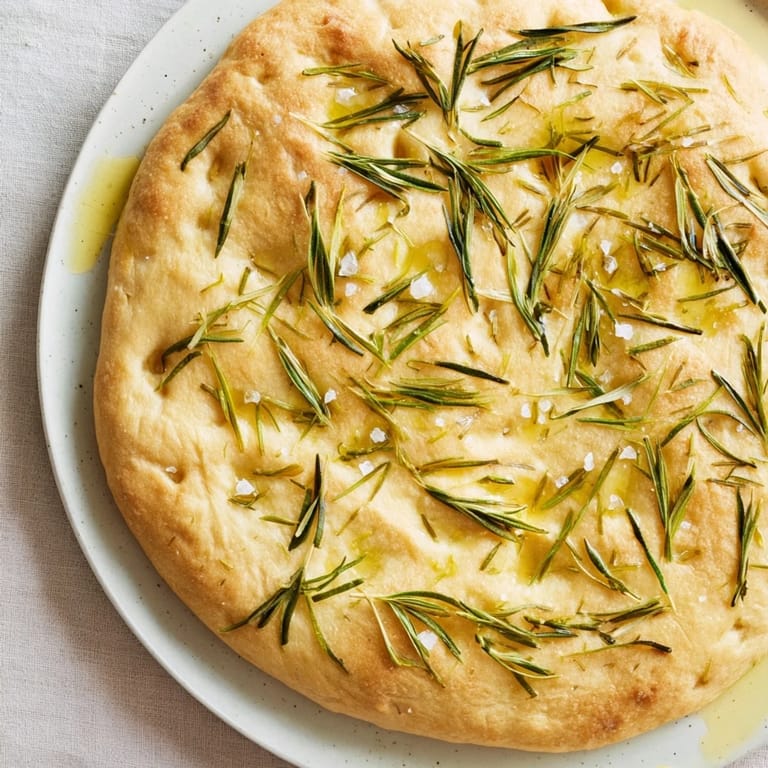
 I pulled my first focaccia out of the oven on a rainy Tuesday when I had nothing but flour, yeast, and a craving for something warm. The smell of rosemary hit me before I even opened the oven door. It wasn't perfect, one corner was too brown, but when I tore off a piece and tasted that olive oil soaked crust, I didn't care. I've been making it ever since, and it never gets old.
I made this for a small dinner party once, and everyone stopped talking when I set it on the table. Someone said it reminded them of a bakery in Florence. I'd never been, but I took it as the highest compliment. We tore it apart with our hands, dipping pieces in olive oil and vinegar until the pan was empty.
Ingredients
- Bread flour: The higher protein content gives you that chewy, airy crumb you want in focaccia, all purpose works, but bread flour makes it better.
- Instant dry yeast: I use instant because you can mix it right in without proofing, and it rises predictably every time.
- Fine sea salt: This goes in the dough for structure, save the flaky stuff for the top.
- Extra virgin olive oil: Don't skimp here, it flavors the dough and creates those crispy, golden pockets on top.
- Lukewarm water: Too hot kills the yeast, too cold slows it down, aim for bathwater warm.
- Fresh rosemary leaves: Chop them just before you use them so the oils stay bright and fragrant.
- Flaky sea salt: The crunch and burst of salt when you bite into it is what makes focaccia feel special.
Tired of Takeout? 🥡
Get 10 meals you can make faster than delivery arrives. Seriously.
One email. No spam. Unsubscribe anytime.
Instructions
- Mix the dry ingredients:
- Whisk the flour, yeast, and fine salt together in a big bowl until everything's evenly distributed. This step takes thirty seconds and keeps your yeast from clumping.
- Add the wet ingredients:
- Pour in the olive oil and lukewarm water, then stir with a wooden spoon until a shaggy, sticky dough forms. It won't look pretty yet, and that's fine.
- Knead the dough:
- Turn it out onto a lightly oiled counter and knead for eight to ten minutes. You'll feel it go from sticky and rough to smooth and elastic under your hands.
- First rise:
- Put the dough in an oiled bowl, cover it with plastic wrap or a damp towel, and let it rise somewhere warm for about an hour. It should double in size and feel puffy when you poke it.
- Prepare the pan:
- Line your baking sheet with parchment and drizzle it with a tablespoon of olive oil. This keeps the bottom from sticking and helps it crisp up.
- Shape the dough:
- Plop the risen dough onto the pan and use your fingers to gently stretch and press it into the corners. Cover it again and let it rest for thirty minutes.
- Preheat the oven:
- Get your oven up to 220°C while the dough is resting. A hot oven is key to getting that golden, blistered top.
- Dimple and top:
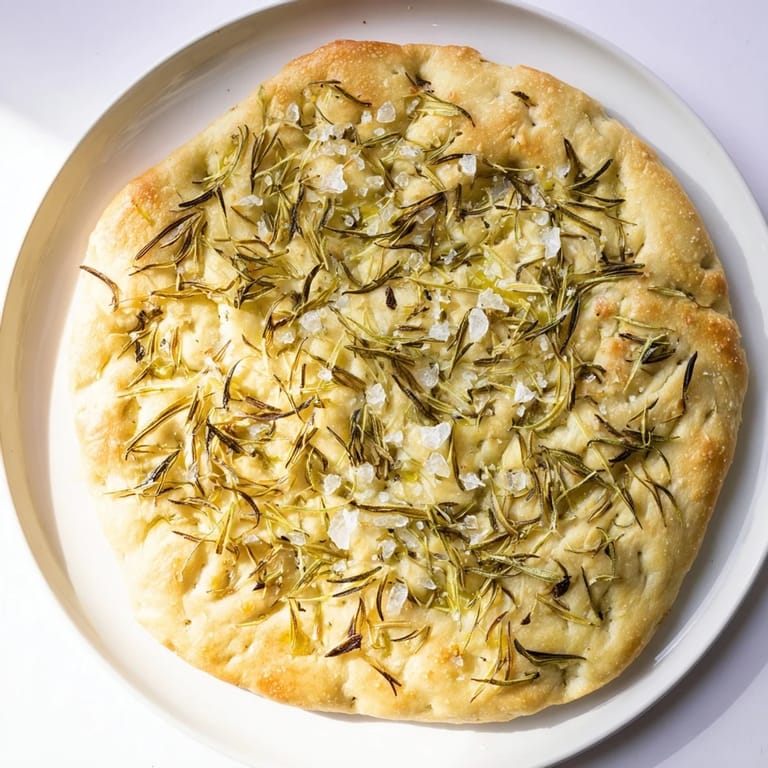
- Press your fingertips all over the dough to make deep dimples, then drizzle with the remaining olive oil. Scatter the rosemary and flaky salt across the top like you're seasoning by instinct, not measurement.
- Bake:
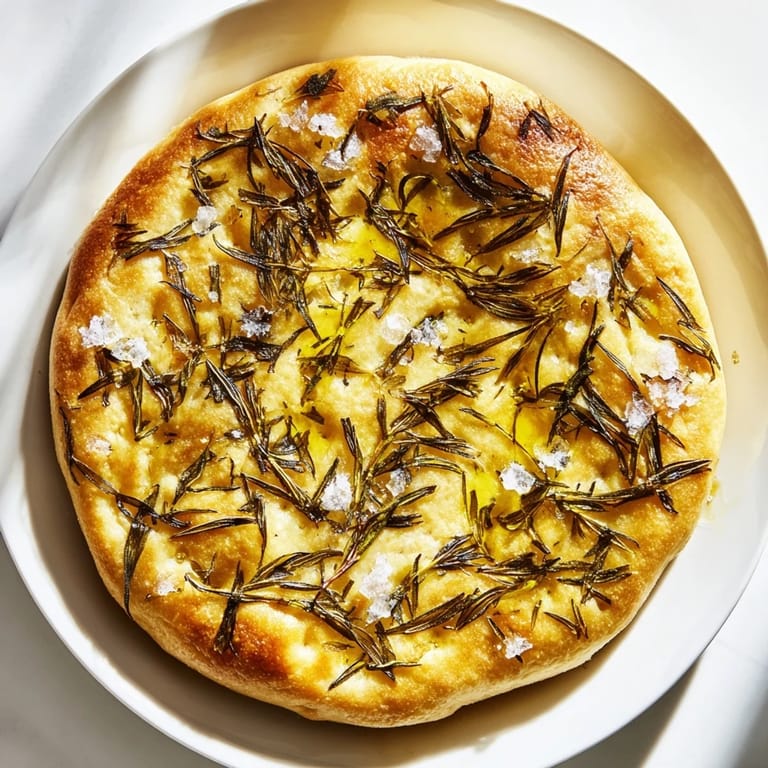
- Slide the pan into the oven and bake for twenty to twenty five minutes, until the focaccia is golden and the edges are crisp. The smell will tell you when it's close.
- Cool and serve:
- Let it cool on the pan for a few minutes, then slice it into squares or tear it with your hands. Serve it warm or at room temperature.
 Save to Pinterest
 The first time I nailed the texture, crispy outside and cloud soft inside, I ate three pieces standing at the counter. My partner walked in and asked if I was okay. I just nodded and kept chewing. That's when I knew this recipe was a keeper.
How to Store and Refresh
Focaccia is best the day you bake it, but if you have leftovers, wrap them in foil and keep them at room temperature for a day or two. To bring it back to life, pop it in a 180°C oven for five minutes. The crust crisps up again and the inside softens like it's fresh.
Ways to Make It Your Own
I've added halved cherry tomatoes before baking and watched them burst and caramelize into sweet, tangy pockets. Sliced olives work too, or you can skip the rosemary and go with garlic and thyme. Once you make it a few times, you'll start throwing in whatever sounds good.
Serving Ideas
I like to serve this with a small bowl of olive oil mixed with balsamic vinegar for dipping. It also makes an excellent side for soup, especially tomato or minestrone. Sometimes I slice it in half horizontally and turn it into a sandwich with mozzarella, basil, and roasted peppers.
- Tear it into pieces and serve it alongside a cheese board.
- Use leftovers to make croutons by cubing and toasting them in olive oil.
- Bring it to a potluck, people always remember the person who brought fresh bread.
 Save to Pinterest
 Every time I make focaccia, I'm reminded that the simplest recipes are often the most satisfying. I hope this one becomes a regular in your kitchen, too.
Recipe FAQs
- → How do I achieve a fluffy focaccia texture?
Use bread flour with a good gluten structure and allow the dough to rise twice. Kneading until smooth develops elasticity, contributing to its airy feel.
- → What is the purpose of dimpling the dough before baking?
Dimpling prevents large air bubbles during baking and helps olive oil and toppings settle evenly, creating that signature focaccia texture.
- → Can I add other toppings to this focaccia?
Yes, additions like halved cherry tomatoes or sliced olives can be added before baking to enhance flavor and variety.
- → What type of salt is best for sprinkling on focaccia?
Flaky sea salt is preferred as it adds a satisfying crunch and bursts of salty flavor on top.
- → How should focaccia be served for best taste?
Serve warm or at room temperature, optionally with extra olive oil or balsamic vinegar for dipping to highlight the bread's aroma.