 Save to Pinterest
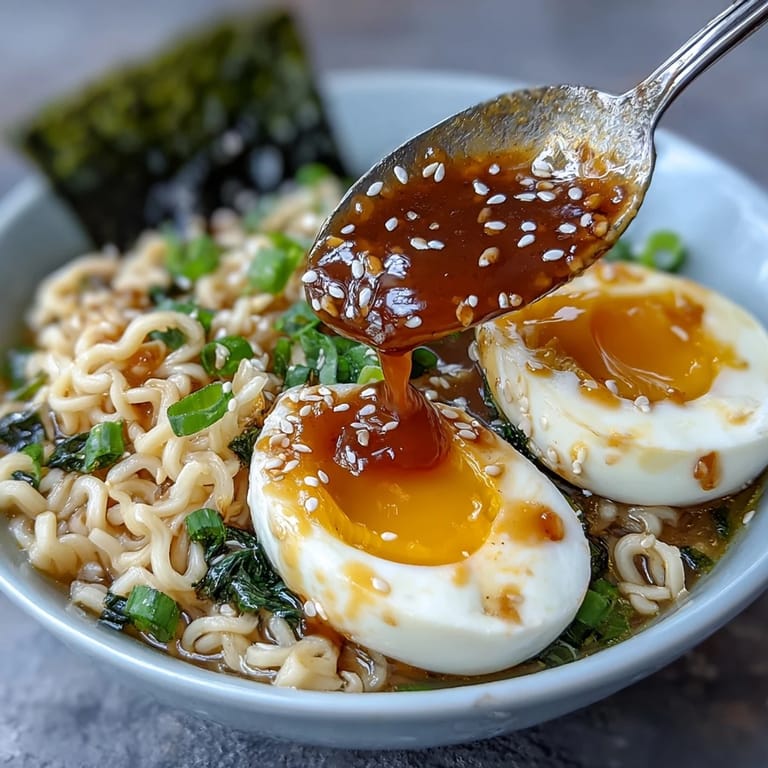
 Cloudy evenings sometimes push me to chase warmth in the kitchen, and miso ramen always seems to answer that call. One night, rain tapping at the windows, I caught the savory, almost sweet scent of simmering miso for the first time and knew dinner would lift our moods. The colors in every bowl—the pop of corn, emerald spinach, and amber eggs—never fail to brighten the table. Every ingredient is a little invitation for creativity, but the ritual of assembling each bowl makes me slow down and enjoy every step. There's a tangible comfort in lifting chopsticks to a steaming tangle of noodles after a long day.
One of my favorite moments was serving this ramen to friends who arrived unexpectedly, both soaked and hungry from an autumn downpour. While the broth simmered, we hovered in the kitchen, the air thick with ginger and garlic, swapping stories as eggs bobbed gently in boiling water and noodles softened. That cozy night convinced me this recipe deserves a spot in anyone's rainy day rotation.
Ingredients
- Low-sodium vegetable broth: Using a milder broth lets the miso shine and keeps the soup from getting too salty—always taste before adding more soy sauce.
- White miso paste: This is the backbone of depth and savoriness, so whisk it separately before adding to avoid clumps.
- Soy sauce: Adds necessary salt and that unmistakable umami, but a splash more at the end can save an undersalted batch.
- Sesame oil: Adds nutty aroma and richness; drizzle in just before garlic and ginger to coax out full flavor.
- Freshly grated ginger: Brightens up the broth—grating it finely makes it almost melt into the soup.
- Garlic cloves: Sautéing until just fragrant keeps bitterness away; careful not to burn.
- Mirin: Optional but a dash of this sweet rice wine rounds out savory notes—I learned not to overdo it or it becomes too sweet.
- Chili paste: Optional for heat; a little transforms the broth from cozy to quietly fiery.
- Ramen noodles: Fresh noodles hold texture better, but dried work well if you respect their cooking time—no soggy noodles allowed.
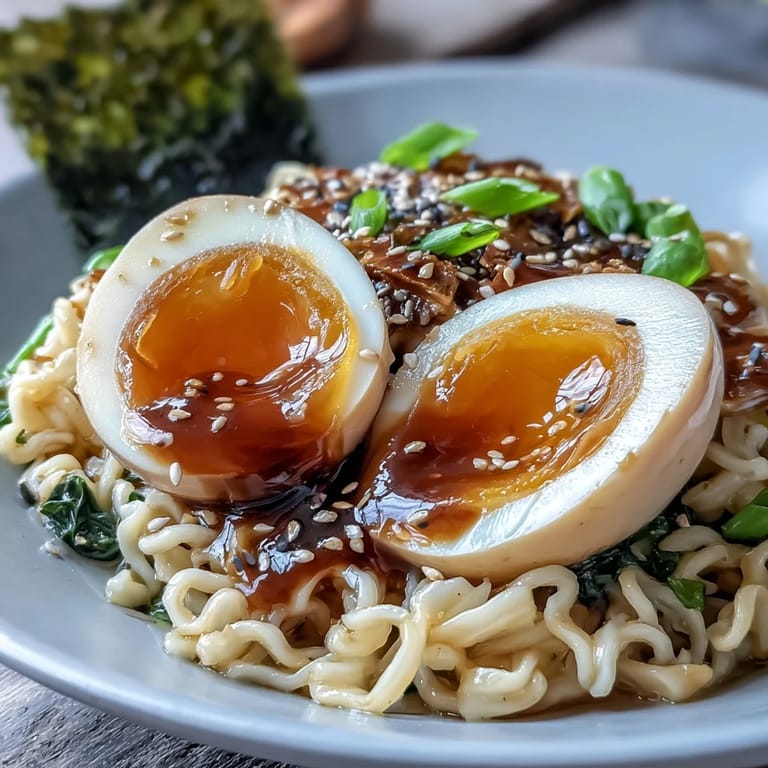
- Eggs: The seven-minute boil is magic for a jammy center; plunge into cold water for effortless peeling.
- Shiitake or cremini mushrooms: Their earthy, meaty bite soaks up broth and gives texture—slice them thick for chewiness or thin for quick cooking.
- Baby spinach: Wilts instantly in the hot broth, so add just before serving for bright color and gentle flavor.
- Corn kernels: Crisp sweetness is a delicious surprise, especially from fresh or lightly cooked frozen corn.
- Green onions: Scatter on top for a clean, zesty finish—the whites more pungent, the greens milder.
- Nori: Just a few strips add oceanic flavor and tie it all together; crisp nori wilts wonderfully on hot soup.
- Toasted sesame seeds: Sprinkle at the end for subtle crunch and aroma—it’s a tiny step that makes the dish sing.
Tired of Takeout? 🥡
Get 10 meals you can make faster than delivery arrives. Seriously.
One email. No spam. Unsubscribe anytime.
Instructions
- Soft-boil the eggs:
- Slide eggs gently into simmering water, watch the tiniest bubbles roll up the sides, and let them cook for exactly seven minutes to keep the yolks just set and golden. Dunk in cold water to halt cooking before peeling—peeling under water helps, especially if the eggs are stubborn.
- Build aromatics:
- Warm the sesame oil on medium, then add ginger and garlic—listen for that fizzing sizzle and inhale deeply before they start to caramelize.
- Sauté mushrooms:
- Add the sliced mushrooms next and stir until they're glossy and softened but not mushy, soaking up those fragrant oils.
- Create the broth:
- Pour in broth, soy sauce, and mirin if using, then lower the heat and simmer gently—there’s no need to rush as flavors meld.
- Whisk in miso:
- In a separate bowl, loosen miso paste with a ladleful of hot broth, then pour it back into the pot to keep the soup silky and lump-free. Add a spoonful of chili paste now if you like your ramen with heat.
- Adjust seasonings:
- Taste for balance—sometimes it craves a touch more soy or a smidge more miso, so adjust carefully.
- Cook the noodles:
- Prepare noodles in a separate pot according to package directions, swirling until just tender, then drain swiftly to prevent overcooking.
- Assemble the bowls:
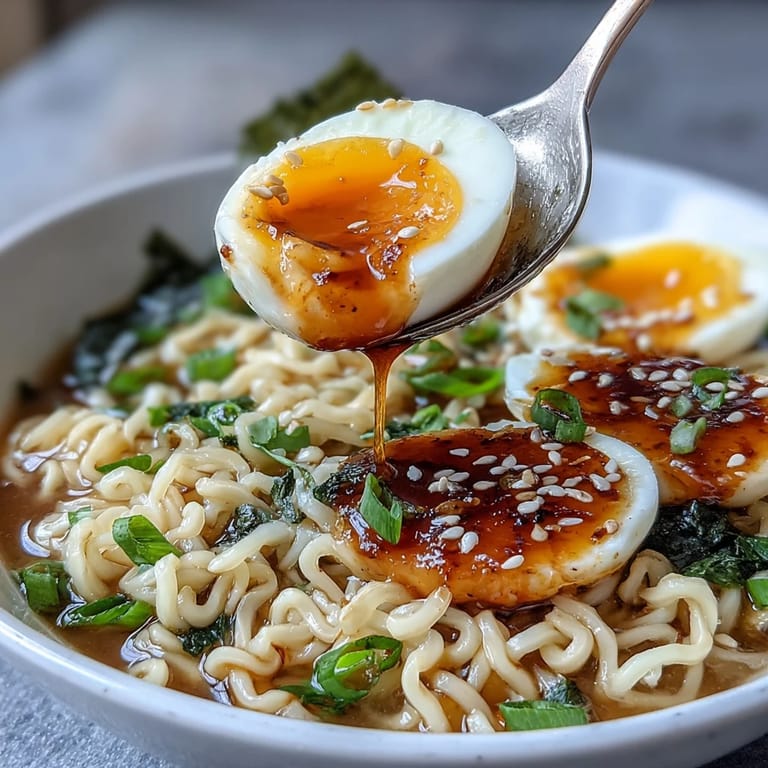
- Divide noodles among bowls, ladle in the miso broth packed with mushrooms, then layer on spinach, corn, spring onions, and nori strips with a practiced hand—presentation always brightens the mood.
- Add eggs and toppings:
- Halve the eggs and nestle them in gently, then finish with a sprinkle of toasted sesame seeds before serving immediately while steaming hot.
 Save to Pinterest
 One evening, as I handed a steaming bowl across the table, a close friend started humming softly with the first bite—an unspoken compliment I’ll always remember. In those moments, this ramen became less about following a recipe and more about creating shared happiness, one noodle-laden spoonful at a time.
Getting the Most from Your Ingredients
I’ve learned shiitake mushrooms provide an almost smoky depth, but if you only have cremini, let them brown a minute longer to draw out extra flavor. Fresh ginger and garlic are essential—jarred versions just don’t give the same freshness and fragrance, so I always keep knobs and bulbs on hand for this meal. Even the nori, quickly cut into strips, pulls the dish unmistakably into ramen territory—don’t skip it if you can help it.
Making It Your Own
Sometimes I stir in leftover roasted tofu or a handful of bean sprouts for crunch, especially when trying to use up odds and ends. Adding bamboo shoots or switching up the greens keeps things interesting, and I’ve been known to sneak in a dash of rice vinegar for a brighter finish. The beauty is in tasting as you go—nothing is set in stone, and every bowl tells a slightly different story.
Simple Tweaks for Best Results
Never underestimate the power of garnishes; a final dusting of sesame seeds or a few extra green onions changes the whole vibe. For vegan friends, swapping out the egg for cubes of seared tofu works beautifully. And don’t forget to adjust seasoning at the very end—you’d be surprised how a dash more miso or soy sauce can transform the broth just before serving.
- If making ahead, cook the noodles just before serving so they stay springy.
- Use a slotted spoon to rescue eggs without cracking the delicate whites.
- If the broth tastes flat, a pinch of sugar and a small splash of vinegar can work wonders.
 Save to Pinterest
 Miso ramen is the sort of meal that always surprises me with its comfort. Bring your own spin, and you’ll soon have friends or family asking when you’ll make it again.
Recipe FAQs
- → How do I get a perfectly soft-boiled egg?
Bring water to a gentle boil, lower eggs carefully, simmer for 7 minutes, then plunge into ice water to stop cooking. Peel when cool and halve just before serving to keep the yolk tender.
- → How should I dissolve miso without losing flavor?
Whisk miso into a ladleful of hot broth off the heat until smooth, then stir it back into the pot. Avoid boiling miso vigorously to preserve its delicate umami.
- → Can I make this vegetarian or vegan?
Yes. Use vegetable broth, omit the soft-boiled eggs, and add cubed tofu or extra mushrooms for protein and texture. Choose plant-based noodles if needed.
- → What’s the best way to cook ramen noodles?
Cook noodles in a separate pot according to package instructions until just tender, then drain. Adding noodles directly to the broth can overcook them and cloud the stock.
- → How can I store and reheat leftovers?
Keep broth and toppings separate from noodles in the fridge for up to 3 days. Reheat broth gently on the stove, then add freshly cooked noodles and toppings when ready to serve.
- → How do I adjust the heat level?
Start with 1 teaspoon of chili paste and increase to taste. Alternatively, serve chili paste on the side so each diner can control the spice.