 Save to Pinterest
 The first time I made tikka salmon, I wasn't even trying to cook Indian food—I'd grabbed a jar of tikka paste on impulse at the market, and my kitchen filled with this warm, smoky aroma that made me stop and pay attention. Twenty minutes later, I had dinner that tasted like something from a proper restaurant, and my roommate asked for seconds before I'd even sat down. That's when I realized that sometimes the best meals come from happy accidents and a willingness to trust unfamiliar spices.
I made this for a dinner party where one guest mentioned being pescatarian almost as an afterthought, and I panicked for exactly ten seconds before remembering the salmon in my freezer. What struck me most wasn't just that everyone loved it—it was how the conversation shifted around the table once people tasted something genuinely spiced and thoughtful. Food has this quiet power to make people feel seen.
Ingredients
- Salmon fillets (4, about 150 g each): Choose fillets that are roughly the same thickness so they cook evenly; skin-on keeps them moister, but skinless works beautifully too.
- Plain yogurt (3 tbsp): This is your binding agent and tenderizer—thick yogurt works best, and plant-based versions work just as well as dairy.
- Tikka masala paste (2 tbsp): This is the star; quality matters here, so taste what you're buying if you can.
- Lemon juice (1 tbsp): Brings brightness and helps the spices sing; fresh squeezed makes a real difference.
- Ground cumin and coriander (1 tsp each): These ground spices add complexity and warmth that the paste alone can't quite deliver.
- Smoked paprika (½ tsp): A small amount gives subtle smokiness without overwhelming the other flavors.
- Chili powder (½ tsp): Adjust this freely—I've made this mild for cautious eaters and spicy for friends who love heat.
- Olive oil (1 tbsp): Helps the marinade coat everything evenly and prevents sticking.
- Salt and black pepper (1 tsp and ½ tsp): Don't skip seasoning the marinade itself; it makes the whole dish sing.
- Fresh coriander and lemon wedges: These aren't optional—they finish the dish with brightness and keep it from feeling heavy.
Tired of Takeout? 🥡
Get 10 meals you can make faster than delivery arrives. Seriously.
One email. No spam. Unsubscribe anytime.
Instructions
- Heat your oven and prep your space:
- Get your oven to 220°C (425°F) and line a baking tray with parchment paper or foil—this stops the spice paste from sticking and makes cleanup almost effortless. A hot oven is non-negotiable here; it's what gives you those crispy edges.
- Build your marinade with intention:
- In a bowl, combine the yogurt, tikka paste, lemon juice, cumin, coriander, paprika, chili powder, olive oil, salt, and pepper, stirring until it's smooth and fragrant. Take a moment to taste it on your finger—it should taste bold and spiced, almost too strong on its own, because it mellows slightly on the fish.
- Prepare the salmon:
- Pat your salmon fillets completely dry with paper towels; this is the one step that actually matters for getting crispy edges. Moisture is the enemy of crispness, so don't skip this.
- Coat generously and marinate:
- Spread the marinade over each fillet, making sure every surface gets covered—the paste should be thick enough that you can see it coating the fish. Let it sit for at least 10 minutes on the counter, or up to an hour in the fridge if you want deeper flavor and have the time.
- Roast until golden and cooked through:
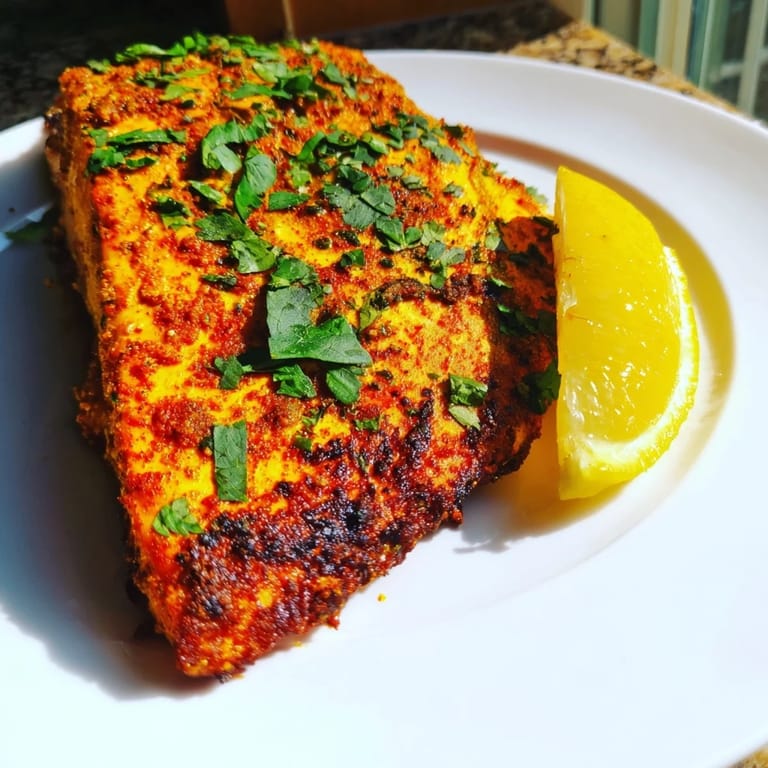
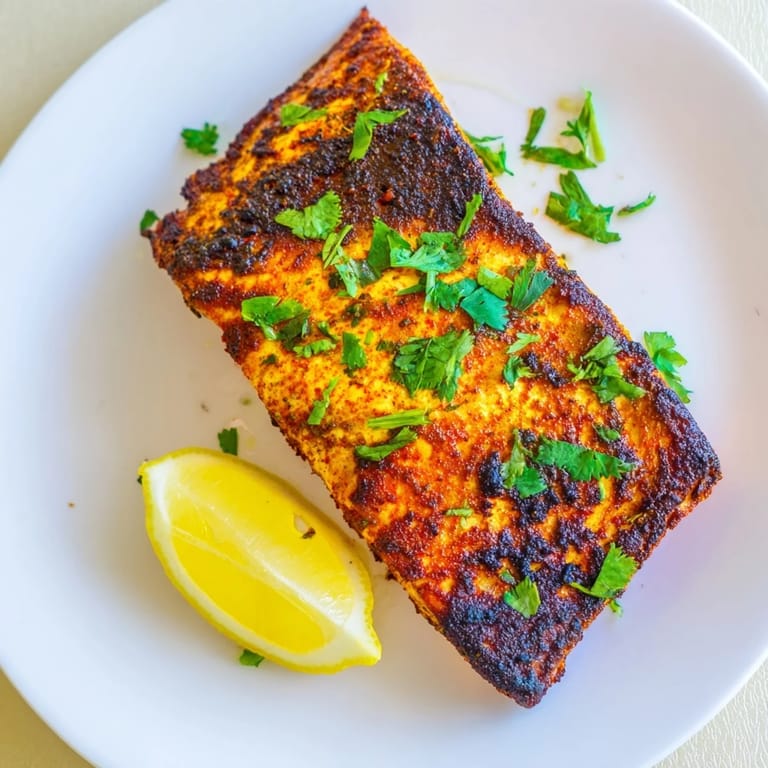
- Pop the tray into your hot oven for 15–18 minutes, watching for the moment the edges start to brown and crisp while the flesh stays tender. The salmon is done when it flakes easily with a fork and the thickest part is opaque.
- Finish and serve:
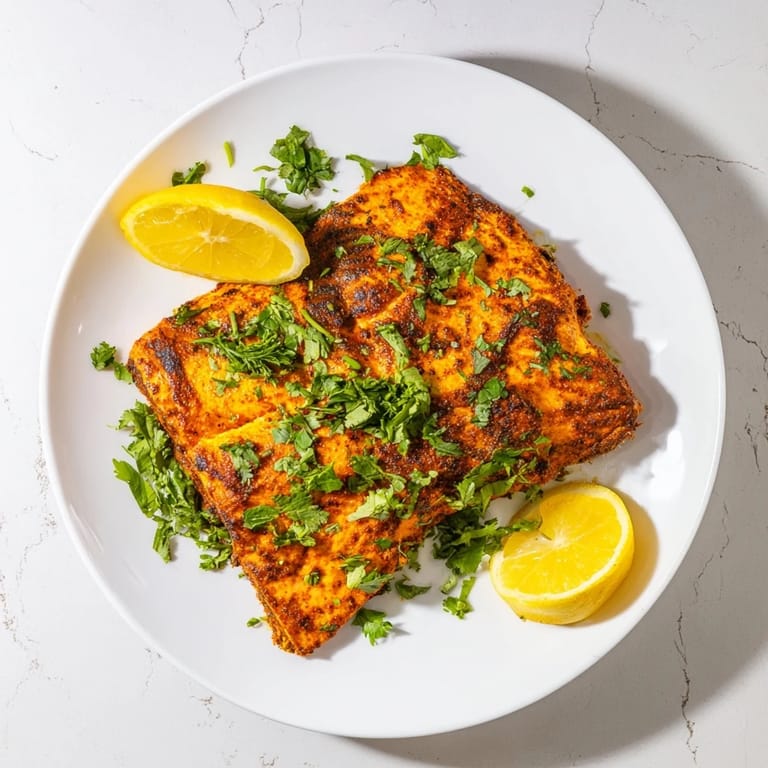
- Remove from the oven and let it rest for a minute, then scatter fresh coriander over the top and serve with lemon wedges on the side. If you want extra char and drama, slide it under the broiler for 1–2 minutes, but watch it closely.
 Save to Pinterest
 I remember cooking this for my partner one quiet weeknight when we'd both had the kind of day that needed comfort, not effort. The way the kitchen filled with those warm spice smells felt grounding somehow, and we ended up eating slowly and talking about nothing important, which was exactly what we needed. That's when I understood this isn't just a weeknight dinner—it's a little moment of care you give yourself.
Why This Works as a Weeknight Dinner
The beauty of this recipe is that the hardest part is mixing the marinade, and that takes about three minutes. Everything else is passive—the oven does the work while you set the table, pour a drink, or just stand in the kitchen and breathe. Because it cooks so quickly and tastes restaurant-quality, it tricks you into feeling like you've done something ambitious when really you've just gotten smart about letting spices do the heavy lifting. Serve it with basmati rice, naan, or even a simple cucumber salad, and suddenly you have a complete meal that feels thoughtful without demanding hours of your attention.
Playing with Heat and Flavor
The chili powder is honestly your dial here—I've made this so mild my niece could eat it, and I've made it so hot my friends reached for water. Start conservative and remember you can always add more spice next time, but you can't take it out. The smoked paprika is doing something quieter but equally important; it's what keeps this from tasting sharp and acidic and instead gives it that warm, almost smoky quality that makes people go quiet and just eat. If you find tikka paste too intense, use less of it and rely more on the ground spices to build flavor gradually instead of all at once.
Making It Your Own
This recipe is flexible in ways that matter—if salmon isn't your thing or your budget won't stretch there this week, cod and haddock work beautifully and cost less. Even firm tofu takes this marinade and roasts up golden if you're cooking for someone pescatarian or vegan. The real point is the spice blend, not the protein, so don't feel locked into salmon if you need to pivot. For dairy-free versions, plant-based yogurt works seamlessly, though it sometimes has a slight tang that actually complements the spices even more. Check your tikka paste for mustard or nuts if that matters for your table, and always taste it before you commit to the full batch.
- If you want extra char and smokiness, finish it under the broiler for 1–2 minutes, but stay in the kitchen and watch it closely.
- Leftovers reheat gently in a 160°C oven for about 8 minutes, or go cold the next day with a squeeze of lemon.
- Make the marinade up to a day ahead and store it covered in the fridge; it actually deepens in flavor overnight.
 Save to Pinterest
 This dish has become my go-to when I want to cook something that feels special but still feels manageable, which is most Tuesday nights. There's something deeply satisfying about feeding people food that tastes like you spent hours on it when you really just trusted your spices and your oven to do the work.
Recipe FAQs
- → How long should the salmon marinate for best flavor?
Marinate the salmon for at least 10 minutes, but for deeper flavor, refrigerate for up to 1 hour before cooking.
- → Can I use a substitute for salmon?
Yes, you can replace salmon with cod, haddock, or tofu depending on your preference.
- → What is the best way to achieve a crispy exterior on the salmon?
Roasting at 220°C (425°F) ensures a crisp outside, and finishing under the broiler for 1-2 minutes adds extra char if desired.
- → How can the heat level be adjusted in this dish?
Adjust the chili powder amount in the marinade to increase or decrease the spice to your liking.
- → What sides complement this spiced salmon well?
Serve alongside basmati rice, naan bread, or a refreshing cucumber salad to balance the spices.