 Save to Pinterest
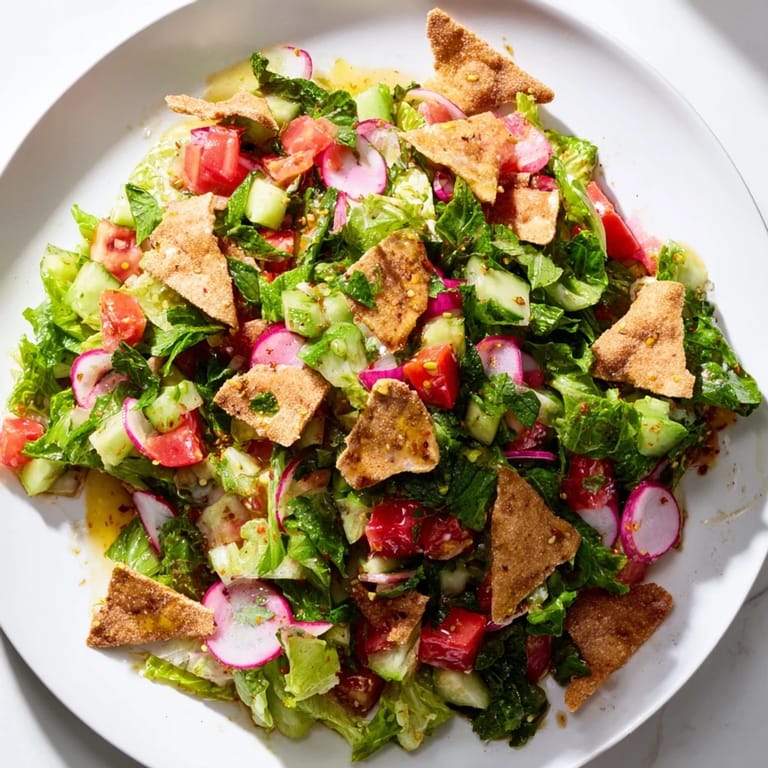
 My neighbor brought a container of fattoush to a potluck years ago, and I watched it disappear faster than anything else on the table. When I finally tasted it, I understood why—the contrast of crispy pita chips against tender greens, the brightness of lemon and sumac hitting all at once, that subtle bite from radishes. I've been making it ever since, always forgetting how simple it really is until I'm tossing the last handful of herbs into the bowl.
One summer I made this for a dinner party and someone asked me to write down the recipe right there at the table. I realized it wasn't the ingredients themselves—it was how they came together, how the warm pita chips softened just slightly when tossed with the cool greens, how the dressing clung to the parsley leaves. That's when it clicked that salads could be more interesting than I'd always assumed.
Ingredients
- Mixed greens (romaine, arugula, or purslane): The base matters more than you'd think—purslane adds an earthy texture if you can find it, but romaine gives you sturdy leaves that won't wilt the moment dressing touches them.
- Tomatoes and cucumber: Use the ripest tomatoes you can find; their sweetness balances the acidity of the dressing beautifully.
- Radishes: These are your crunch insurance and they add a peppery bite that wakes up the whole dish.
- Red onion: Slice it thin and don't skip it—the sharpness is essential to the flavor profile.
- Fresh parsley and mint: These aren't garnish; they're main players, so be generous with them.
- Pita bread: Look for thick pita that will actually crisp up instead of turning to cardboard.
- Extra-virgin olive oil: Get the good stuff here because it's tasted straight in the dressing.
- Ground sumac: The secret weapon—it's tangy and floral without being overpowering.
Tired of Takeout? 🥡
Get 10 meals you can make faster than delivery arrives. Seriously.
One email. No spam. Unsubscribe anytime.
Instructions
- Toast the pita until it shatters:
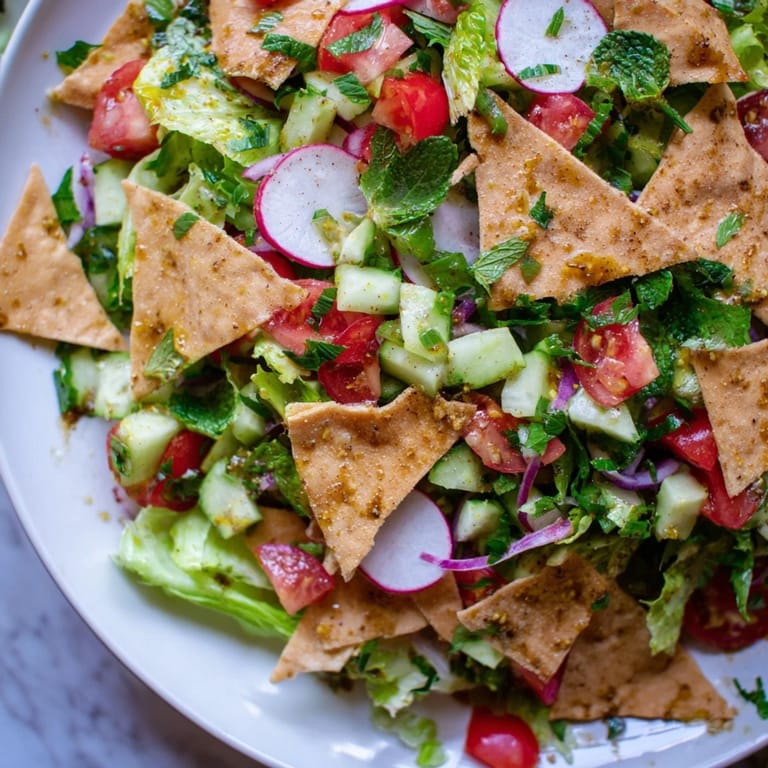
- Heat your oven to 375°F and cut the pita into bite-sized pieces. Toss them with olive oil and salt, then spread them out on a baking sheet so they're not crowded. Bake for 8 to 10 minutes, watching toward the end—they'll go from golden to burnt faster than you'd expect. They should cool on the pan so they crisp up further.
- Build your salad base:
- Chop everything into similarly sized pieces so each bite feels intentional. Toss the greens, tomatoes, cucumber, radishes, onion, parsley, and mint together in a large bowl, seasoning lightly as you go.
- Whisk the dressing:
- Combine olive oil, lemon juice, vinegar, sumac, and garlic in a small bowl, whisking until it emulsifies and looks slightly creamy. Taste it before you combine it with the salad—this is your chance to adjust the sumac if you want it more pronounced.
- Combine at the last moment:
- Add the pita chips to the salad right before serving, then pour the dressing over everything and toss gently. This timing keeps your chips crispy and is the whole point of the dish.
- Taste and serve:
- Give it a final taste for salt and pepper, then serve it immediately while the pita still has some snap to it.
 Save to Pinterest
 My daughter came home from school one day excited about learning Middle Eastern history, and I made this salad for dinner that night. She told me it tasted like what she'd been reading about, and suddenly a simple salad felt like we were connected to something bigger than just lunch. Food has that power sometimes.
The Sumac Secret
Sumac is the ingredient that separates a good fattoush from a forgettable one. It's tart and slightly floral, with an almost fruity complexity that lemon juice alone can't replicate. If you haven't cooked with it before, start with a teaspoon and taste as you go—it can be polarizing, but once you get it right, you'll wonder how you ever made salad dressing without it. Buy it from a specialty grocery store or online, and keep it in a cool dark place because the flavor fades quickly.
Playing with the Greens
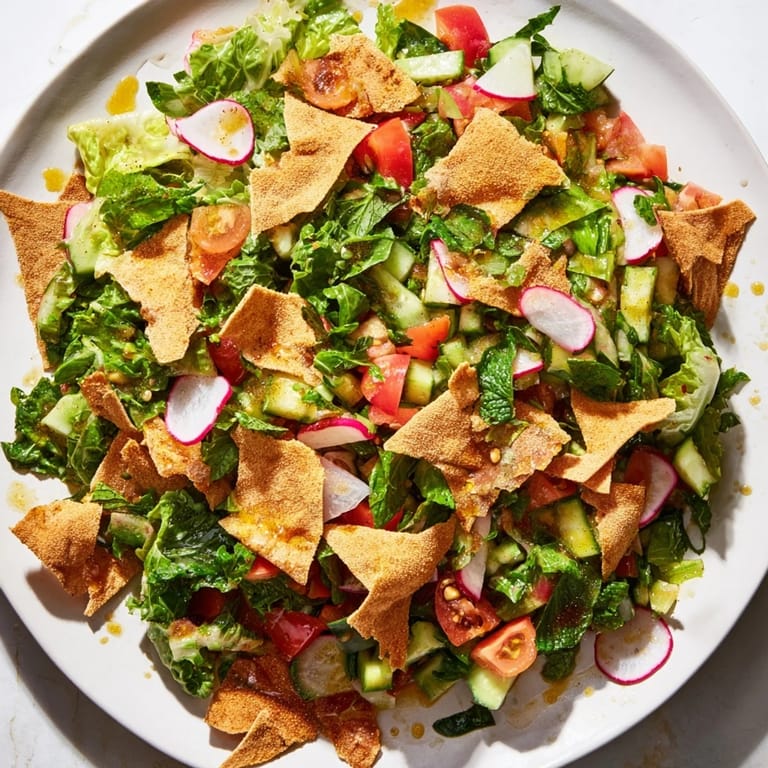
The original recipe calls for romaine, arugula, or purslane, and each one changes the personality of the salad slightly. Romaine is mild and crisp, arugula brings a peppery bite that echoes the radishes, and purslane—if you can find it—adds an earthy, almost lemony undertone that feels especially authentic. You don't need to stick with just one; mixing them gives you layers of flavor and texture that feel more intentional than using a single green.
Making It Your Own
While fattoush is perfect as written, it's also a forgiving dish that welcomes personalization. Add bell pepper for sweetness, toss in green onions for extra allium punch, or sneak in chickpeas if you want more protein. Some people crisp their pita with za'atar instead of just salt, others add a squeeze of pomegranate molasses for depth. The fundamentals stay the same, but you're invited to make it reflect what you have and what you love.
- Pomegranate molasses adds a deeper tartness if you want to go beyond lemon and vinegar.
- Crisp the pita with za'atar, sumac, or even just salt and black pepper for different flavor directions.
- Fresh herbs like dill or cilantro work beautifully alongside the parsley and mint.
 Save to Pinterest
 Fattoush is the kind of salad that feels light when you're eating it but surprisingly satisfying when you're done. Make it once and you'll have it in your rotation forever.
Recipe FAQs
- → What does sumac add to the salad?
Sumac offers a tangy, lemony flavor that brightens the salad and complements the fresh vegetables perfectly.
- → How do I make crispy pita chips?
Cut pita bread into small pieces, toss with olive oil and sea salt, then bake at 375°F (190°C) for 8-10 minutes until golden and crisp.
- → Can I add other vegetables to the salad?
Yes, diced bell peppers or green onions can add variation and extra flavor to the mix.
- → Is this suitable for vegan diets?
Absolutely. All ingredients are plant-based and free from dairy, making it vegan-friendly.
- → What tools are needed for preparation?
A baking sheet for pita chips, salad bowl for mixing, small bowl for dressing, whisk, knife, and cutting board are required.