 Save to Pinterest
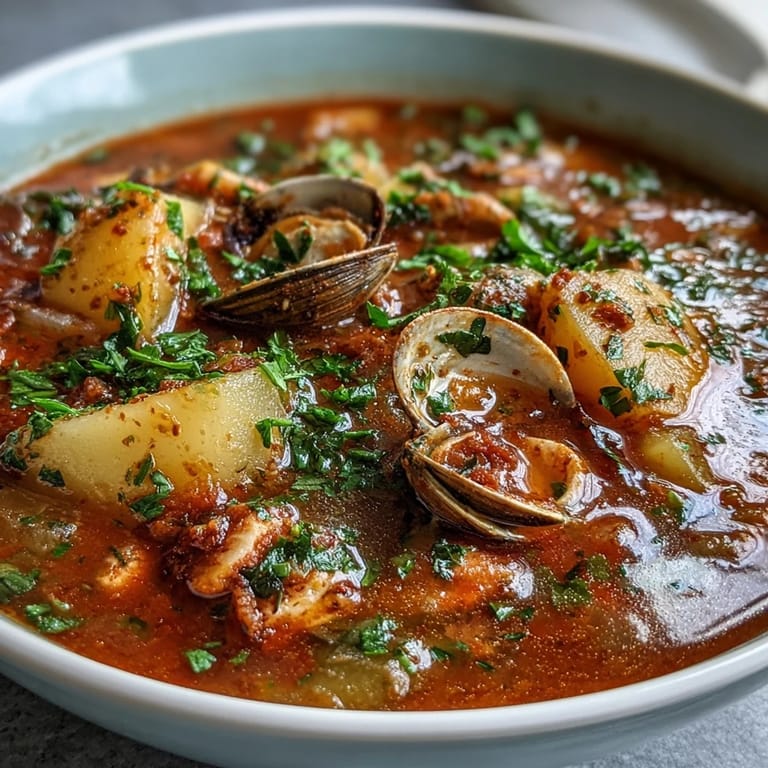
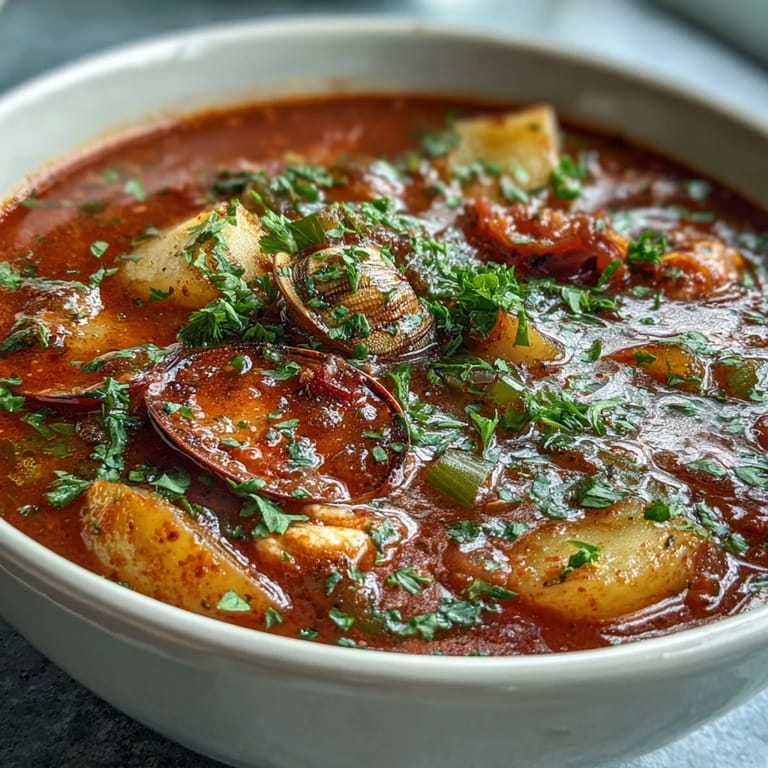
 I was wandering through the narrow streets of Boston's North End when a salty breeze from the harbor mingled with the aroma of tomatoes and herbs from a tiny restaurant. Peeking through the window, I watched a cook stirring Manhattan clam chowder, its vibrant red broth nothing like the creamy New England version I'd grown up with. The first spoonful of that tomato-based chowder, brimming with tender clams and vegetables, completely changed my seafood soup perspective. Years later, I still make this recipe when I want that perfect balance of oceanic flavor without the heaviness of cream.
Last autumn, during our annual beach house rental, I made a massive pot of this Manhattan chowder on a stormy evening. Everyone had spent the day collecting shells and watching whitecaps crash against the shore before the weather turned. As rain pelted the windows, we gathered around the weathered dining table, passing crusty bread and steaming bowls of this ruby-red soup. Even my nephew, normally suspicious of anything containing vegetables, asked for seconds.
Ingredients
- Fresh or Canned Clams: Fresh littlenecks provide exceptional flavor, but I've learned that high-quality canned clams work beautifully when you're short on time or can't source fresh seafood.
- Clam Juice: This briny liquid is the secret backbone of the soup, providing depth that vegetable or chicken stock simply cannot match.
- Yukon Gold Potatoes: After experimenting with different varieties, I've found Yukons maintain their shape while absorbing flavors better than russets, which tend to disintegrate.
- Green Bell Pepper: This uniquely American addition distinguishes Manhattan from other clam chowders, providing a subtle garden freshness that balances the oceanic notes.
- Crushed Red Pepper Flakes: Just a small amount adds warmth without overwhelming heat, waking up all the other flavors without turning the chowder spicy.
Tired of Takeout? 🥡
Get 10 meals you can make faster than delivery arrives. Seriously.
One email. No spam. Unsubscribe anytime.
Instructions
- Prepare Your Clams:
- If using fresh clams, scrub them thoroughly under cold water to remove any grit before steaming them until their shells pop open. I always find something meditative about this process, watching each shell gradually reveal its treasure.
- Build The Flavor Base:
- The sizzle of vegetables hitting olive oil fills the kitchen with that unmistakable cooking promise. Watch as the diced onions, celery, carrots and bell pepper gradually soften and release their aromas.
- Develop The Broth:
- When you add the tomatoes and clam juice, the transformation begins as two distinct elements merge into something entirely new. Let everything come to a gentle boil before reducing to a patient simmer.
- Cook The Potatoes:
- These starchy nuggets serve as the chowder's foundation, so let them simmer until just fork-tender. They'll continue cooking slightly even after the heat is turned off.
- Add The Clams Last:
- Whether fresh or canned, clams need minimal cooking or they'll toughen. Fold them in gently during the final minutes, just enough to warm them through.
 Save to Pinterest
 On my thirty-fifth birthday, instead of going out, I invited friends over and served this chowder alongside a simple green salad and crusty bread. As conversation flowed and spoons clinked against bowls, my normally chef-critical friend Mark fell silent, then looked up and said, "This tastes like the ocean, but better." Something about that moment - the honest praise, the warmth of friendship, and the satisfaction of nourishing people I care about - cemented this recipe in my rotation forever.
Flavor Variations
Sometimes I render bacon as a first step, using the fat to sauté the vegetables before adding the crispy bacon pieces back at the end. The smokiness introduces an entirely different dimension that pairs wonderfully with the tomato and clam flavors. During summer months when corn is at its peak, I often toss in a handful of fresh kernels during the last five minutes of cooking, creating sweet pops of texture against the savory background.
Serving Suggestions
This chowder deserves proper accompaniments to make it shine brightest. I've found that oyster crackers are the traditional choice, but a warm slice of sourdough bread with a thin smear of salted butter creates a perfect vehicle for sopping up the last drops from your bowl. For a complete meal, pair with a simple arugula salad dressed with lemon juice and good olive oil to cleanse the palate between spoonfuls.
Storage and Leftovers
The flavors in this chowder actually improve after a night in the refrigerator, making it an ideal make-ahead meal. I've discovered that reheating requires gentle attention, as boiling can toughen the clams and muddy the bright flavors that make this soup special.
- Store cooled chowder in airtight containers in the refrigerator for up to three days.
- Reheat on the stovetop over medium-low heat, stirring occasionally until just heated through.
- If freezing portions, do so without the clams and add freshly cooked ones when reheating for the best texture.
 Save to Pinterest
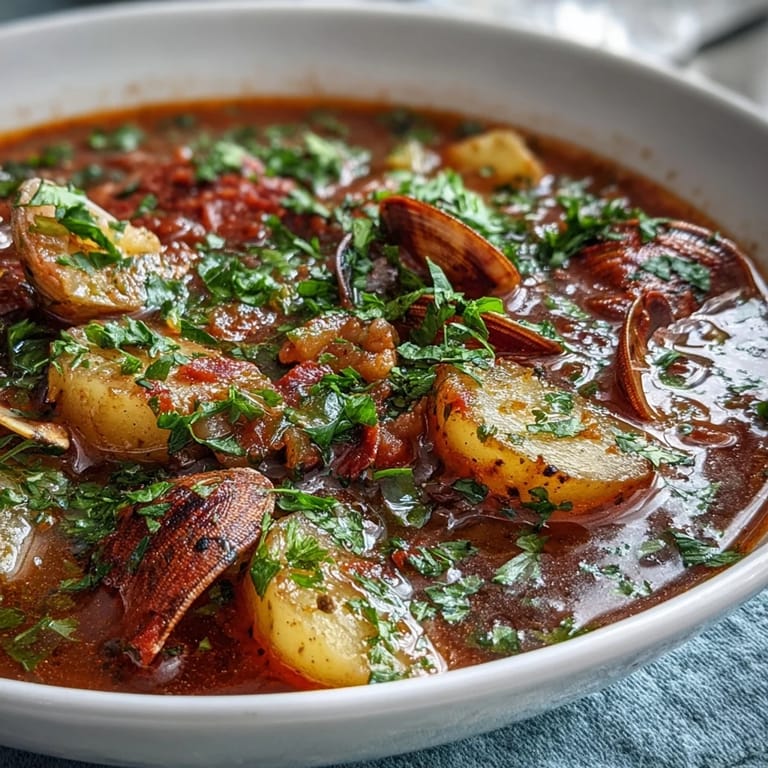
 Each time I make this Manhattan clam chowder, I'm transported back to that tiny Boston restaurant where I first discovered it. It reminds me that sometimes the most meaningful culinary discoveries happen when we least expect them.
Recipe FAQs
- → What makes Manhattan clam chowder different from New England style?
Manhattan clam chowder features a clear, tomato-based broth rather than the creamy milk base of New England chowder. This gives it a lighter, more vibrant character with brighter acidity from the tomatoes.
- → Can I use canned clams instead of fresh?
Absolutely. Canned chopped clams work well in this chowder. Just remember to reserve the liquid from the cans and supplement with bottled clam juice to reach the required 3 cups of liquid.
- → How should I store leftover clam chowder?
Store cooled chowder in an airtight container in the refrigerator for up to 3 days. Reheat gently over medium-low heat, stirring occasionally to prevent sticking. The flavors often improve after a day.
- → What type of potatoes work best for this chowder?
Yukon Gold potatoes are ideal because they hold their shape well during cooking and have a naturally creamy texture. Avoid russets, which may become too soft and break down in the broth.
- → Can I make this clam chowder dairy-free?
This Manhattan clam chowder is naturally dairy-free since it uses a tomato-based broth rather than cream or milk. Just ensure your clam juice and any garnishes don't contain dairy products.
- → What can I serve with Manhattan clam chowder?
Oyster crackers and crusty sourdough bread are classic accompaniments. The chowder also pairs well with a simple green salad or roasted vegetables for a complete meal.