 Save to Pinterest
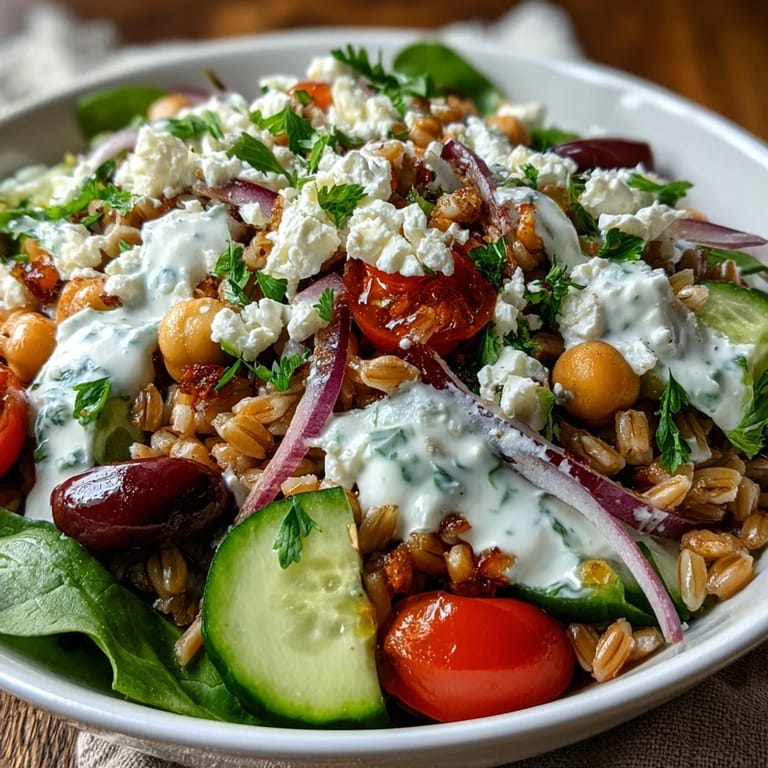
 There's something about the way farro catches the light when it's freshly cooked—those little pearls glistening with broth, ready to absorb whatever flavors you throw at them. I discovered this bowl on a lazy Sunday afternoon when my garden was overflowing with tomatoes and cucumbers, and I realized I had all these Mediterranean staples scattered across my kitchen. It became my solution for those moments when I wanted something that felt both restaurant-worthy and completely unpretentious, the kind of meal that makes you feel nourished without any fuss.
My partner once asked why I was making "rabbit food" when I assembled the first bowl, then ate half of it without asking. That's when I knew this recipe had staying power—it's the kind of dish that converts skeptics through sheer deliciousness and satisfying texture.
Ingredients
- Farro: This nutty, chewy grain holds up beautifully to the dressing and adds a texture you won't get from regular rice or couscous.
- Vegetable broth: The quality here matters more than you'd think—it becomes the flavor foundation for everything else.
- Cherry tomatoes: Halving them rather than dicing lets their sweetness shine and prevents the bowl from getting watery.
- Cucumber: A cooling contrast to the warm farro, and it stays crisp even if you make this ahead.
- Red bell pepper: The sweetness plays beautifully against the briny olives and tangy dressing.
- Kalamata olives: Pit them yourself if you can find unpitted ones—they taste noticeably better and you'll understand why immediately.
- Red onion: Thinly slicing this raw gives you sharp, clean bites that ground the whole bowl.
- Baby spinach: It wilts slightly from the warm farro, which is exactly what you want here.
- Chickpeas: Whether canned (drained and rinsed) or cooked from dried, they provide the protein and earthiness that makes this a complete meal.
- Tahini: Buy the good stuff from a brand you trust—cheap tahini tastes bitter and grainy.
- Lemon juice: Always fresh, never bottled; it's the bright note that holds the entire dressing together.
- Extra-virgin olive oil: This isn't the place to economize, and it makes the dressing silky.
- Garlic: One small clove is enough; more turns the dressing harsh and aggressive.
- Ground cumin: Just a whisper of it adds warmth without being obvious about it.
- Feta cheese: Crumbling it by hand rather than buying pre-crumbled gives you better texture and flavor.
- Fresh parsley: The final green note that makes the bowl look like you care, because you do.
Tired of Takeout? 🥡
Get 10 meals you can make faster than delivery arrives. Seriously.
One email. No spam. Unsubscribe anytime.
Instructions
- Simmer the farro until tender:
- Combine rinsed farro and vegetable broth in a medium saucepan, bring to a boil, then lower the heat and cover. Let it cook gently for 25 to 30 minutes—you're listening for when the liquid is absorbed and the grains are tender but still have a slight chew. Drain any excess if needed and set it aside to cool slightly so it doesn't wilt your spinach.
- Prep your vegetables while the farro cooks:
- Halve those cherry tomatoes, dice the cucumber and bell pepper, slice the olives and red onion, and leave the spinach as is. Having everything ready means the final assembly becomes almost meditative rather than stressful.
- Whisk the tahini dressing until smooth:
- In a small bowl, combine tahini, lemon juice, olive oil, water, minced garlic, and cumin, whisking until you get something that flows like silk. If it's too thick, add water a teaspoon at a time until it reaches the consistency of loose yogurt, then taste and adjust salt and pepper.
- Combine everything in a large bowl:
- Add the cooked farro to a large mixing bowl along with all your prepped vegetables, the spinach, and the chickpeas. Drizzle the dressing over everything and toss gently with your hands or a wooden spoon—you want the dressing distributed but the components still visible, not mashed together.
- Divide and garnish:
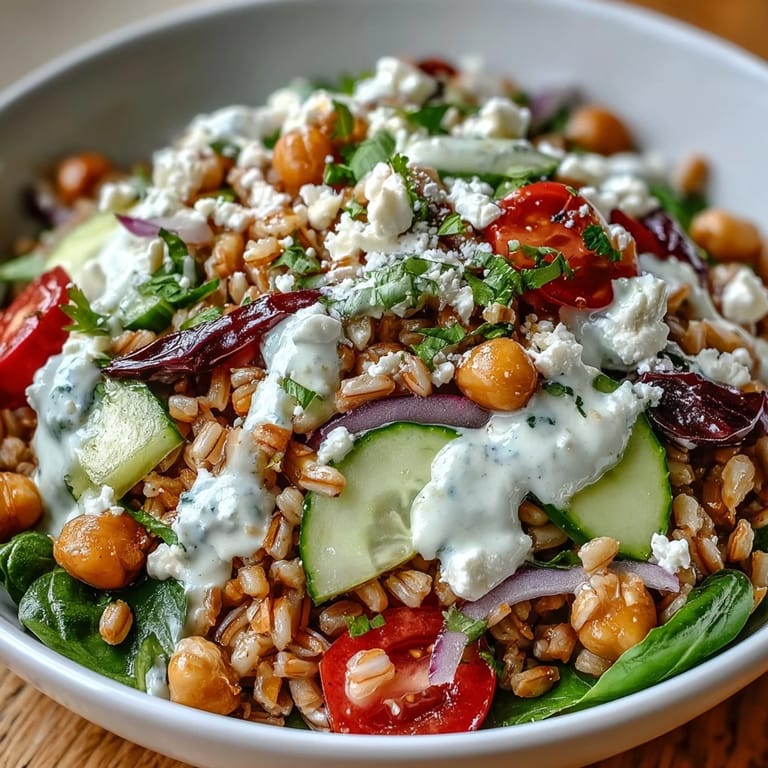
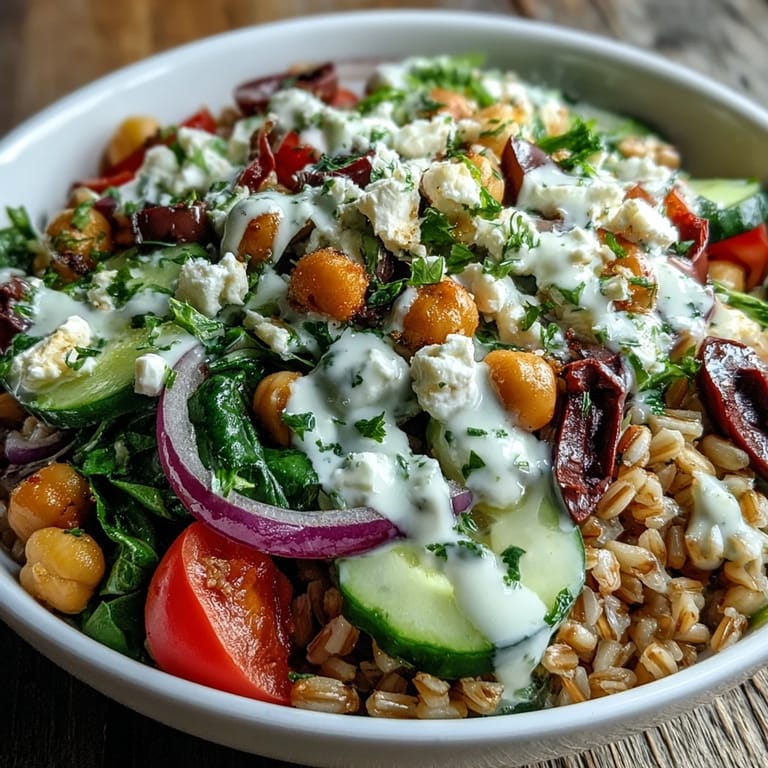
- Spoon the bowl into serving dishes or mason jars if you're making ahead, then top each with crumbled feta and a generous handful of fresh parsley. The contrast of warm farro against cool vegetables and creamy dressing is part of the magic.
 Save to Pinterest
 I brought this bowl to a potluck once, expecting it to sit untouched while everyone reached for the heavier casseroles, and instead watched people go back for seconds and ask for the recipe. That moment taught me that simple, honest food prepared with care is never boring.
Building Flavor Through Layering
This bowl works because every element brings something different to the table—the warm earthiness of farro, the cool crunch of raw vegetables, the briny punch of olives, the creaminess of tahini. Rather than trying to make one ingredient shine, you're creating a conversation between flavors where each one makes the others taste better. It's why this dish feels sophisticated without any pretense.
Making It Your Own
The beauty of a bowl is that it bends to your preferences and what's available to you. I've made this with roasted eggplant instead of raw peppers on chilly evenings, added pomegranate seeds for brightness and crunch, and once even swapped the chickpeas for grilled halloumi because that's what I had. The tahini dressing is sturdy enough to carry whatever protein and vegetables you choose, which means this becomes less of a recipe to follow exactly and more of a framework for eating well.
Storage and Make-Ahead Tips
This is one of those rare recipes that genuinely improves when made the day before, as long as you keep the dressing separate. The flavors meld and deepen, the farro continues to absorb subtle flavors, and you get a complete meal ready to grab from your refrigerator during a busy week. I've kept these bowls for up to two days and they remain perfectly good, though the vegetables lose some crispness.
- Store the dressing in a separate small jar and dress the bowl just before eating to keep everything fresh and textured.
- If you're taking this for lunch, pack the dressing in a container and drizzle it right before you eat rather than mixing at home.
- Toast any leftover farro with olive oil and garlic the next morning if you have extra—it's a completely different, equally delicious side dish.
 Save to Pinterest
 This bowl is what I reach for when I want to feel nourished without any heaviness, when I'm cooking for myself or feeding guests who appreciate simplicity done well. It's become proof that the best meals aren't the most complicated ones.
Recipe FAQs
- → Can I make this gluten-free?
Yes, simply substitute farro with quinoa or brown rice. Both maintain the hearty texture while making it completely gluten-free.
- → How long does this keep in the refrigerator?
This bowl stays fresh for up to 2 days when stored in an airtight container. Add dressing just before serving to maintain texture.
- → What protein alternatives work well?
Grilled chicken, shrimp, or extra-firm tofu are excellent options. The chickpeas make it vegetarian, while these additions add variety.
- → Can I prepare components ahead?
Absolutely. Cook farro and chop vegetables up to 2 days in advance. Store separately and combine with fresh dressing when ready to serve.
- → How do I adjust the dressing consistency?
Add warm water one teaspoon at a time until desired thickness is reached. The dressing naturally thickens when chilled.