 Save to Pinterest
 The salty breeze off the harbor drifts through my kitchen window every time I make clam chowder, no matter where I actually live. My first attempt came after a weekend trip to Boston where I tasted a bowl so perfect I nearly canceled my flight home. Standing over the pot while the cream and clam juice simmer together, I'm transported to weathered docks and foggy mornings in a place I've come to love through its signature dish.
Last winter when my cousins visited from California, I ladled this chowder into my grandmother's antique bowls while a nor'easter howled outside. The table fell silent except for the clinking of spoons and murmurs of appreciation. My youngest cousin, normally suspicious of anything from the ocean, asked for the recipe before the meal was even over, and later sent me photos of her first attempt with a proud smile.
Ingredients
- Fresh or Canned Clams: I learned that fresh littlenecks yield the sweetest flavor, but quality canned clams have rescued this recipe countless times when the fishmonger is closed.
- Salt Pork or Bacon: This humble ingredient creates the flavor foundation that separates good chowder from great chowder, rendering fat that carries the sea-meets-smoke essence throughout.
- Yukon Gold Potatoes: After years of experimenting, I found these hold their shape while still breaking down just enough to lend creaminess without turning to mush.
- Heavy Cream: The splurge that transforms this from soup to an experience, creating that silky mouthfeel that lingers pleasantly after each spoonful.
Tired of Takeout? 🥡
Get 10 meals you can make faster than delivery arrives. Seriously.
One email. No spam. Unsubscribe anytime.
Instructions
- Prepare the Clams:
- If using fresh clams, scrub them under cool water until the shells feel clean against your fingertips. Watch them carefully as they steam open, revealing their treasure inside - it always feels like a small celebration when they pop.
- Build the Flavor Base:
- The sizzle of salt pork slowly rendering its fat fills the kitchen with a promise of what's to come. Notice how the fat takes on a clear quality when it's properly rendered, before you add the butter and vegetables.
- Create the Roux:
- Sprinkle the flour over your sautéed vegetables and watch it transform from dusty powder to a golden paste. This brief cooking removes any raw flour taste while building the foundation that will thicken your chowder.
- Develop the Broth:
- Pour in the liquids slowly, whisking constantly as the mixture transforms before your eyes from thick paste to silky broth. The aroma shifts from earthy to oceanic as the clam juice meets the dairy.
- Simmer to Perfection:
- The gentle bubble of potatoes cooking in the fragrant broth requires patience but rewards with tenderness. You'll know they're done when a fork slides through with just slight resistance, maintaining their shape but giving comfort.
- Bring It All Together:
- Adding the clams last preserves their delicate texture and sweet flavor. As you stir them in, imagine waves gently folding into shore, careful not to break the tender morsels.
 Save to Pinterest
 My friend Sarah, who claimed to hate seafood her entire life, took one hesitant spoonful of this chowder during our monthly dinner club and then looked up with wide eyes. The conversation paused as she wordlessly reached for oyster crackers and sprinkled them across the top, then proceeded to finish her entire bowl before anyone else. Sometimes food speaks more eloquently than words ever could about connection and comfort.
The Secret to Clam Selection
Littleneck clams might be traditional, but I've discovered that a mix of clam varieties creates layers of flavor that make guests pause mid-conversation to appreciate what's happening in their bowl. On a practical Tuesday night when the fish counter looks sparse, canned clams work remarkably well, especially if you boost them with bottled clam juice and finish with a squeeze of fresh lemon that wasn't in my original recipe but now seems essential.
Balancing Creaminess and Brine
The tension between rich dairy and oceanic brine creates chowder's magical appeal, something I learned during a cooking class in Portland where the chef insisted we taste the broth at each stage. Too much cream masks the delicate clam flavor, while too little creates something closer to clam-studded potato soup. After years of adjusting my own ratios, I've found that equal parts milk and cream create the perfect canvas for the seafood to shine through without disappearing.
Serving Your Chowder
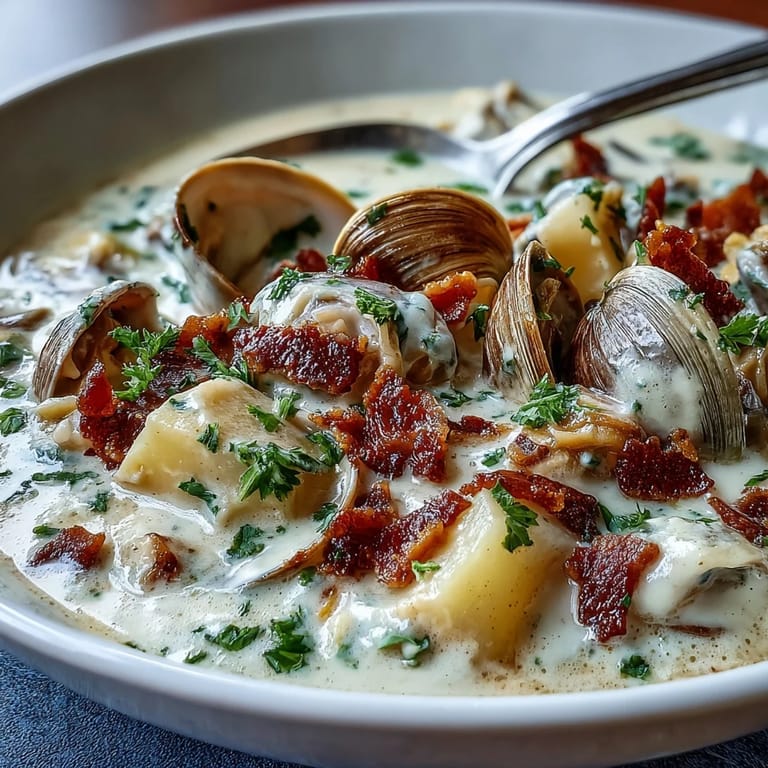
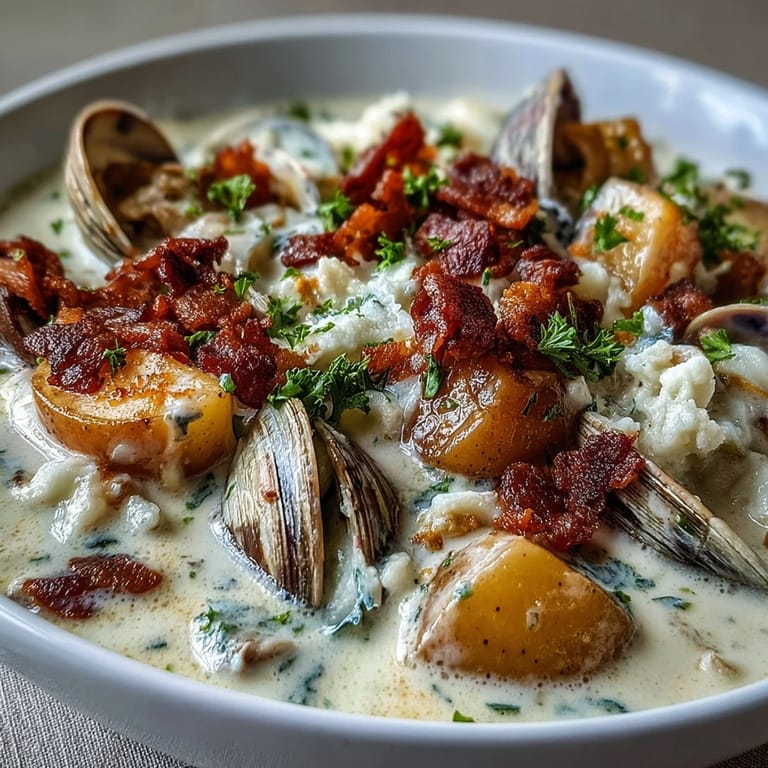
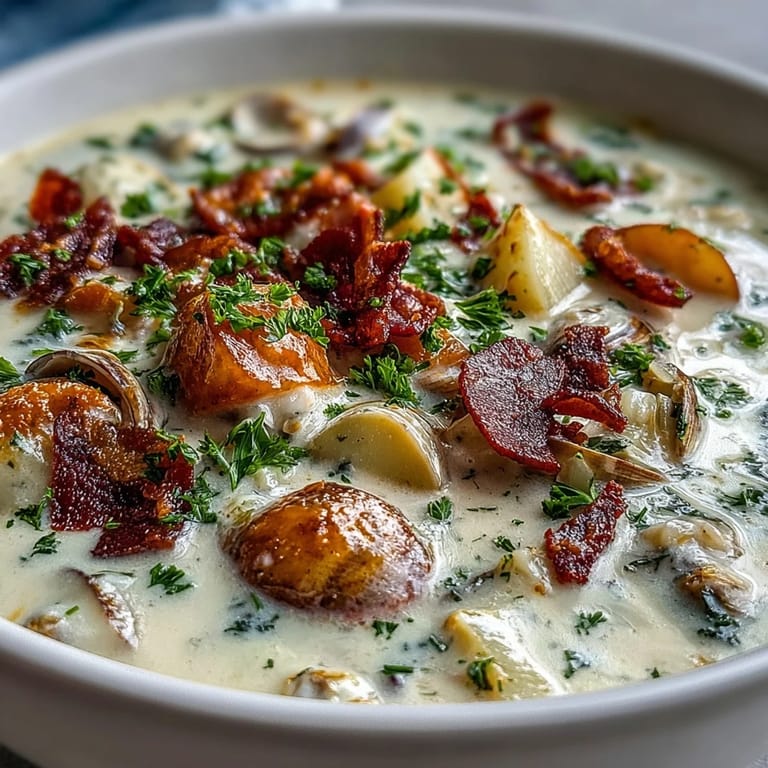
Presentation elevates this humble soup to something worthy of celebration, a lesson from my grandmother who insisted chowder deserved the good bowls even on ordinary weeknights. The alabaster white of a proper New England chowder shows best against dark stoneware, creating a striking contrast that primes the senses before the first spoonful reaches your lips.
- Warm your serving bowls in the oven at low temperature for a few minutes before ladling in the hot chowder to maintain the perfect temperature throughout the meal.
- Keep oyster crackers in a separate bowl rather than pre-sprinkling them, allowing guests to control the amount and preserve the crackers' satisfying crunch.
- Pour small glasses of cold white wine alongside rather than large ones, as the richness of the chowder pairs best with frequent small sips that refresh the palate.
 Save to Pinterest
 This chowder connects me to places I've loved and people I've shared it with, each bowl a small communion of flavors that reaches beyond mere sustenance. May it bring the same warmth and connection to your table, whether on stormy nights or sunny afternoons.
Recipe FAQs
- → What makes New England clam chowder different from Manhattan style?
New England chowder features a rich, creamy milk-based broth, while Manhattan version uses tomatoes for a red, clear soup. The creamy style relies on heavy cream, milk, and a butter roux for its signature velvety texture and white appearance.
- → Can I make this with canned clams instead of fresh?
Absolutely. Canned chopped clams work beautifully—just reserve the juice from the cans to enhance the broth's clam flavor. You'll need about 2 cups of canned clams with their liquid. Many home cooks prefer the convenience and consistent flavor of canned clams.
- → Why shouldn't I boil the chowder after adding clams?
Boiling after adding clams can make their meat tough and rubbery. Gentle simmering keeps the clams tender and prevents the dairy from separating or curdling. Maintain just below a bubble to preserve the creamy texture and delicate seafood flavor.
- → How long does leftover chowder keep in the refrigerator?
Properly stored in an airtight container, chowder keeps well for 3-4 days. The flavors often develop and improve overnight. Reheat gently over low heat, stirring occasionally to prevent sticking. Avoid high heat which can cause the dairy to separate.
- → Can I freeze New England clam chowder?
Freezing is possible but may affect texture. Dairy can sometimes separate when thawed. For best results, cool completely before freezing in portion-sized containers. Thaw overnight in refrigerator and reheat very gently, stirring frequently to re-emulsify the cream.
- → What's the best way to achieve the perfect creamy consistency?
The key is creating a proper roux with flour and butter before adding liquids. Cook the flour for 2 minutes to eliminate raw taste. Whisk in dairy gradually to prevent lumps. Simmering uncovered allows slight reduction, naturally thickening the chowder further.