 Save to Pinterest
 There's something magical about assembling a tomato salad at the height of summer when the farmers market overflows with heirloom varieties in every shade. One afternoon, I stood in my kitchen holding a warm Brandywine tomato still faintly smelling of the vine, and it hit me: the simplest dishes demand the best ingredients. That's when basil oil became my secret. Not a drizzle of regular oil, but something herbaceous and alive, transformed in moments in the blender. This salad became my answer to nearly every summer gathering—bright, effortless, and somehow always the dish people ask about.
I'll never forget serving this to my friend Elena, who was skeptical about tomato salad until she tasted the basil oil. She went quiet for a moment—the kind of quiet that means something just shifted—then asked for the recipe. A week later, she texted me a photo of her version made with striped zebra tomatoes from her garden. That's when I knew it wasn't really my recipe anymore; it became ours.
Ingredients
- Heirloom tomatoes (4 large, assorted colors): The foundation of everything; choose ones that feel heavy in your hand and smell intensely fragrant at the stem end. Pale supermarket tomatoes won't deliver the complexity you need here.
- Fresh mozzarella (200 g / 7 oz, sliced or torn): Look for it in the specialty section, still warm if possible, or buy it a few hours before and let it reach room temperature. Cold mozzarella tastes rubbery; room-temperature mozzarella tastes like clouds.
- Fresh basil leaves (1 cup, loosely packed): This is not a garnish amount; you need enough to transform into oil. Genovese basil has the truest flavor, but any sweet basil will work beautifully.
- Extra-virgin olive oil (60 ml / 1/4 cup): Don't hide a mediocre oil here. This is your other main player. A peppery Tuscan oil or a grassy Spanish one both shine.
- White balsamic or red wine vinegar (1 tablespoon): The acid brightness that wakes up everything. White balsamic keeps the salad's jewel tones clear; red wine vinegar adds deeper notes.
- Red onion (1 small, thinly sliced, optional but recommended): A whisper of sharpness that grounds the sweetness. If you're nervous about raw onion, soak the slices in ice water for 10 minutes to soften the bite.
- Sea salt and freshly ground black pepper, to taste: Season generously; tomatoes can absorb more salt than you'd expect.
Tired of Takeout? 🥡
Get 10 meals you can make faster than delivery arrives. Seriously.
One email. No spam. Unsubscribe anytime.
Instructions
- Make the basil oil:
- Tear the basil leaves and drop them into your blender with the olive oil. Pulse until the leaves break down completely and the oil turns a vivid green—this should take about 30 seconds. If you strain it through a fine mesh sieve, you'll get a cleaner oil, but honestly, I often skip this step and embrace the flecks of green.
- Build the foundation:
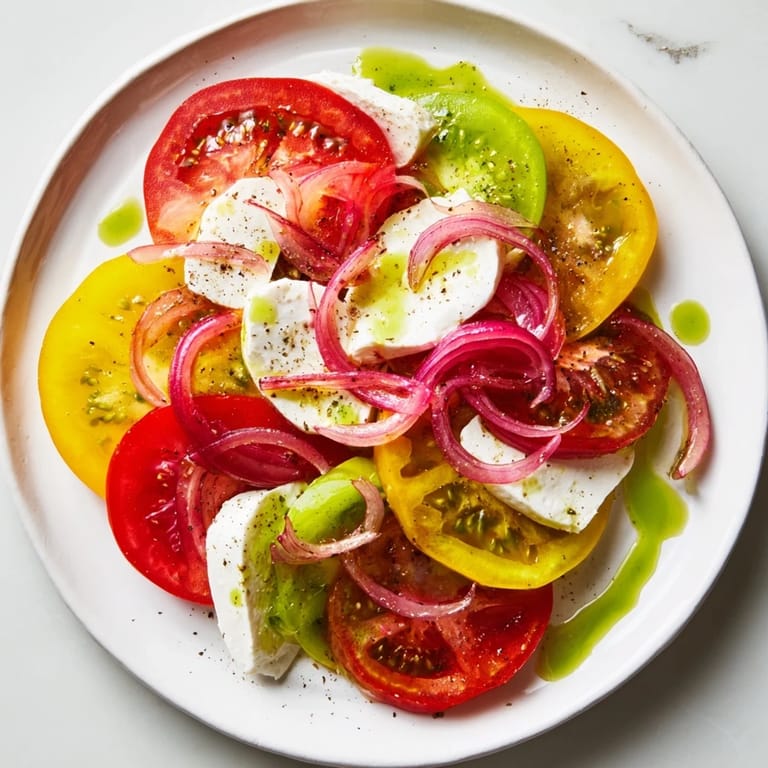
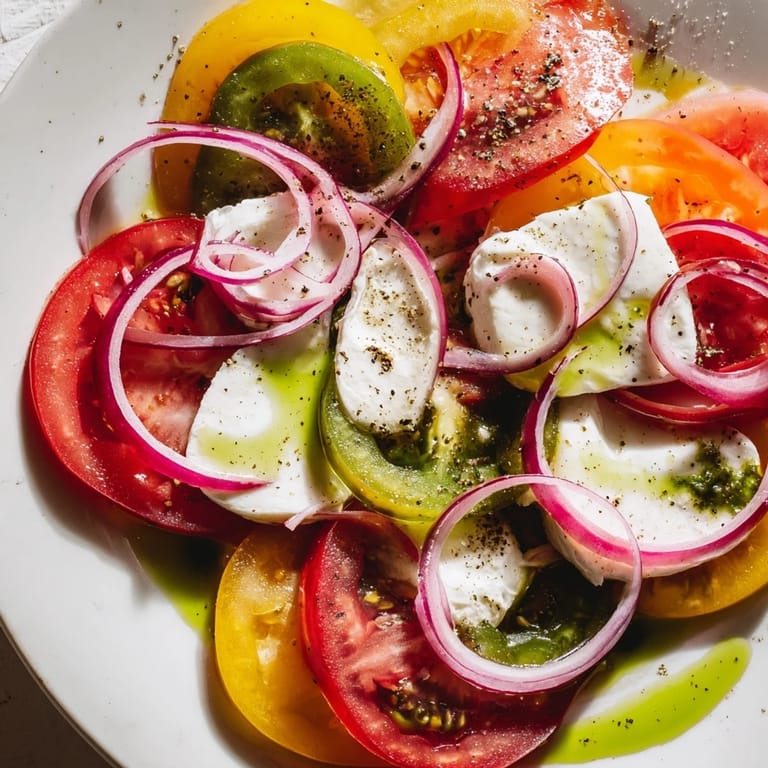
- Arrange your tomato slices on a large platter, overlapping them slightly in a way that feels casual, not fussy. This is your canvas. Tuck pieces of mozzarella between the tomatoes, letting some get nestled in the warm crevices where they'll soften slightly.
- Layer on the onion (if using):
- Scatter the red onion slices across everything. They'll continue to soften and turn slightly sweet as they sit.
- Crown with green liquid:
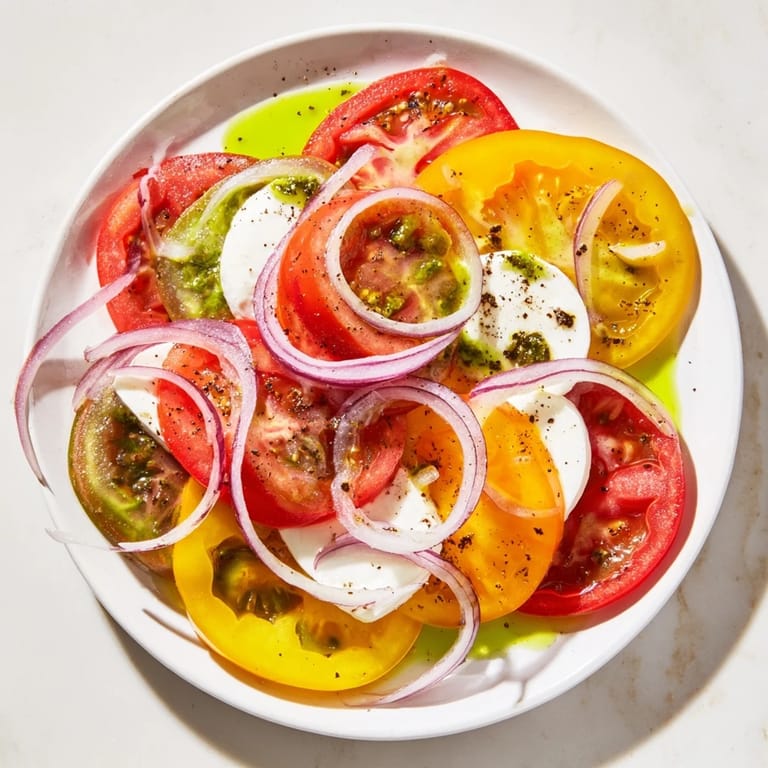
- Drizzle the basil oil generously all over—don't hold back. This is where the magic lives. Sprinkle sea salt and black pepper across the whole thing, being honest about the amounts.
- Finish and serve:
- Just before serving, drizzle the vinegar across the top. Serve immediately while the mozzarella is still soft and everything is still at its most vivid. This salad is best eaten within 30 minutes of assembly.
 Save to Pinterest
 This salad transformed from a simple dish into something I make whenever I want to slow down and remember why summer cooking matters. It's proof that five good ingredients treated with respect will always outshine complicated recipes.
Variations That Feel Natural
The first time I substituted burrata for mozzarella, I felt like I was cheating—until I cut into that creamy center and realized some recipes deserve their luxuries. Burrata turns this into something even more decadent, though the regular mozzarella version will always be my default. I've also added ripe peaches in late summer when tomatoes start to feel tired, and the sweetness against the salt and basil creates this unexpected harmony. The point is, this is a framework, not a law.
What to Serve It With
Grilled sourdough dressed with a little of the basil oil becomes almost another course, something to drag through any leftover dressing at the bottom of the platter. A crisp Sauvignon Blanc or a chilled rosé pairs beautifully—you want something that won't compete with the tomato's brightness. In my experience, this salad is perfect alongside grilled fish or just as a light dinner on a warm evening when nobody wants to eat anything heavy.
The Basil Oil Revelation
Once you understand that basil oil is not decoration but the actual heart of the dish, everything changes. I started making double batches to keep on hand all summer—drizzled over soups, stirred into hummus, brushed on grilled vegetables, or whisked into vinaigrettes. The blender transforms a handful of leaves and olive oil into something precious in seconds. This technique taught me that green herbs don't have to be delicate afterthoughts; they can be bold and substantial when given the chance.
- Toast the basil leaves lightly in a dry pan for 30 seconds before blending if you want deeper, more complex flavor.
- Leftover basil oil keeps refrigerated for about three days, though it's best used fresh.
- Make basil oil in small batches so you can use it at its most vibrant.
 Save to Pinterest
 Summer tomato salad is one of those recipes that taught me simplicity is its own kind of skill. When you get it right, everything else feels possible.
Recipe FAQs
- → How do you make basil oil for this salad?
Blend fresh basil leaves with extra-virgin olive oil until smooth. Strain if you prefer a clear, refined oil.
- → Can I substitute the mozzarella?
Burrata works well for an extra creamy texture, or you can use fresh goat cheese for a tangier twist.
- → What vinegar is best for drizzling?
White balsamic vinegar offers a mild sweetness, but red wine vinegar provides a sharper flavor. Choose based on preference.
- → Is it necessary to use heirloom tomatoes?
Heirloom tomatoes add vibrant color and flavor, but ripe vine tomatoes or cherry tomatoes can work as alternatives.
- → How should this dish be served?
Serve immediately after dressing to maintain freshness and texture, ideally on a large platter for easy sharing.