 Save to Pinterest
 There's something about summer that makes you crave simplicity, and that's exactly what drew me to this Caprese salad bowl years ago at a tiny Roman trattoria tucked away from the tourist crowds. The chef—an older woman whose name I never learned—assembled it with the casual confidence of someone who'd made it a thousand times, and watching her slice those tomatoes paper-thin while basil leaves tumbled from her weathered hands felt like witnessing something sacred. I tried to replicate it that same evening in my apartment kitchen, standing at the counter with grocery store tomatoes that tasted like water, learning the hard way that this dish lives or dies by your ingredients. Now I make it whenever I want to remember that not everything needs complexity to be memorable.
I made this for my neighbor last August when she brought over homemade pesto and mentioned offhandedly that she missed the markets near her grandmother's place in Tuscany. Watching her face light up when she bit into the first forkful—that exact moment when the basil released its fragrance and she closed her eyes—reminded me why cooking for people matters. She came back the next week asking for the recipe, and I realized I'd spent so much time memorizing techniques that I'd almost forgotten the real magic is in sharing something that tastes like home, even if home is somewhere you've never been.
Ingredients
- Ripe tomatoes (400 g, heirloom or cherry): Hunt for tomatoes that smell like tomato at room temperature—that's your first sign they'll actually taste like something worth eating, and don't let anyone convince you that salads are a good reason to compromise on produce.
- Fresh mozzarella balls (250 g, bocconcini or sliced): Buy it the day you plan to use it because the difference between fresh and day-old is the difference between silky and rubbery, trust me on this one.
- Fresh basil leaves (1 small bunch): Tear them by hand instead of cutting with a knife if you want to preserve their flavor, a small detail that matters more than it sounds.
- Rustic bread (4 slices, ciabatta or sourdough): Choose something with texture and air pockets so it toasts unevenly and gets crispy on the outside while staying slightly chewy inside.
- Extra-virgin olive oil (3 tbsp): This isn't the time to grab whatever's on sale—use something you'd actually taste on bread because that's the entire dressing here.
- Balsamic vinegar (1½ tbsp): Real balsamic is thick and syrupy and expensive, but even the midrange stuff transforms this salad into something that tastes deliberately constructed rather than hastily thrown together.
- Salt and freshly ground black pepper: Finish with these at the last moment rather than stirring them in, so they land on the surface where you can actually taste them.
Tired of Takeout? 🥡
Get 10 meals you can make faster than delivery arrives. Seriously.
One email. No spam. Unsubscribe anytime.
Instructions
- Toast your bread into golden shards:
- Slide those slices under the broiler or into a hot pan, listening for the sound of them getting crispy—it usually takes just a few minutes before they shift from pale to deeply golden. Cut or tear them into chunks that feel substantial enough to stand up to the juices from the tomatoes without disintegrating immediately.
- Build your foundation:
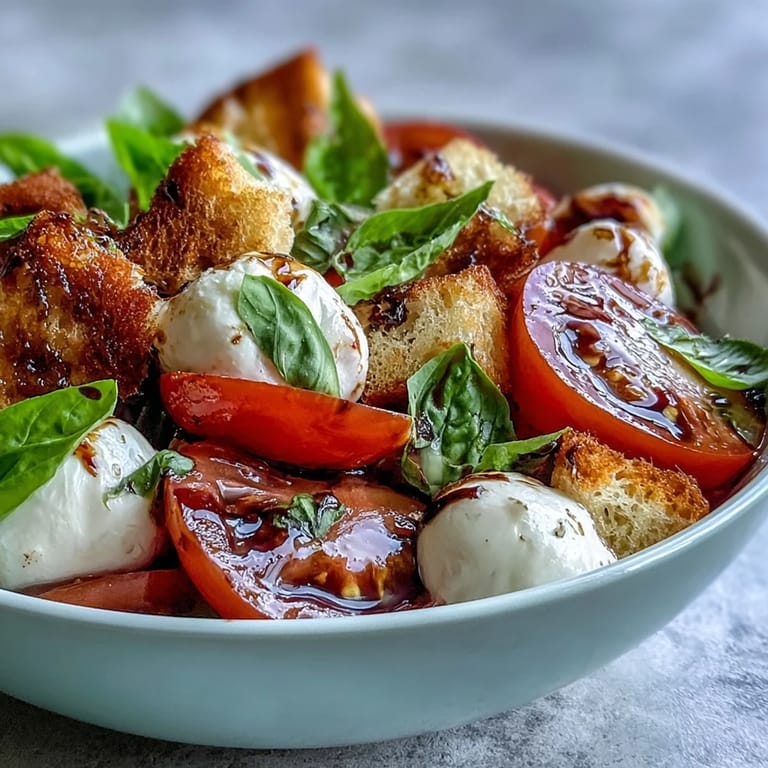
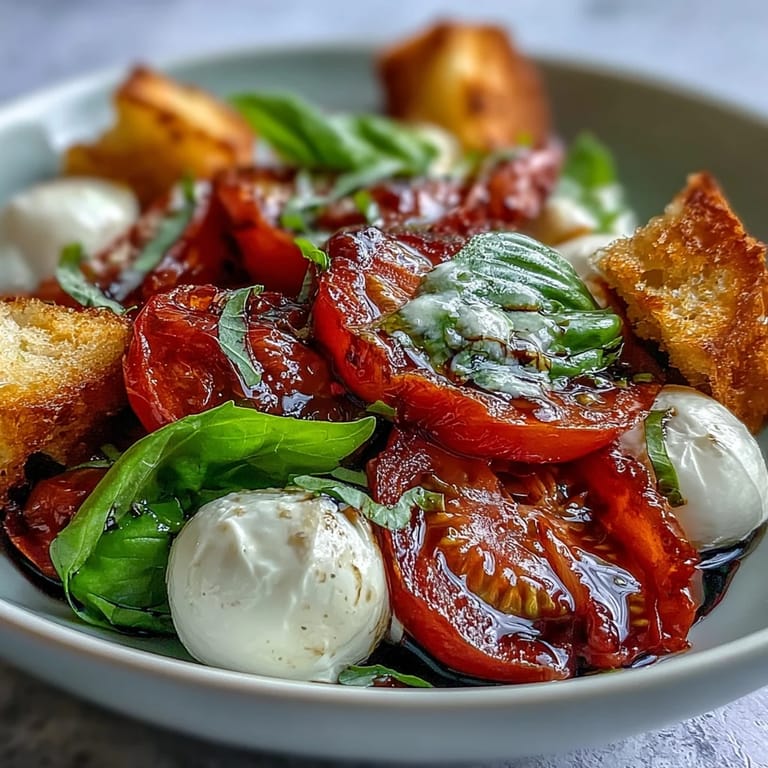
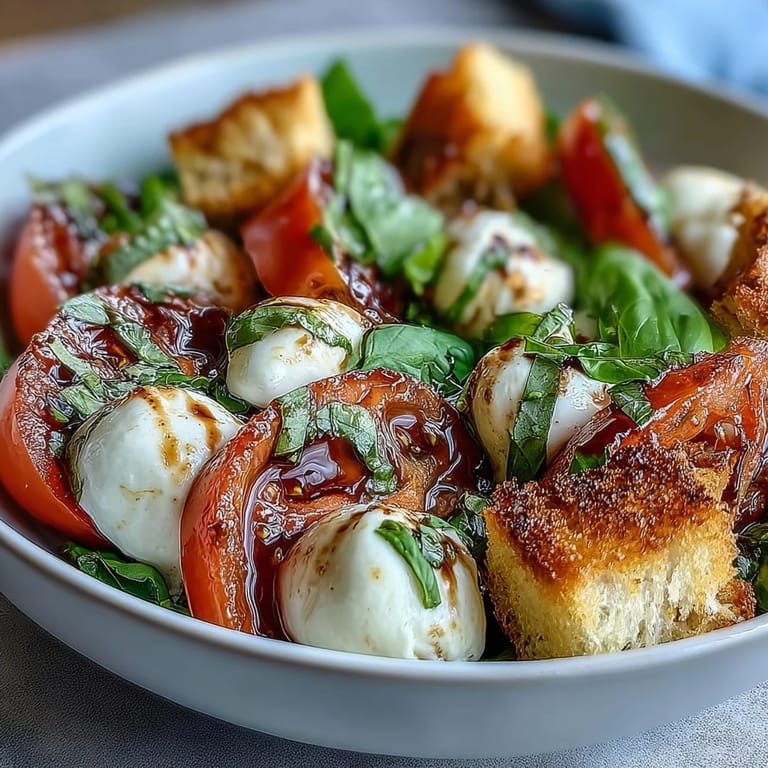
- Arrange tomatoes and mozzarella on a large bowl or platter in whatever pattern pleases you, though alternating them back and forth creates the visual effect that says you actually know what you're doing. Think of it less like following orders and more like composing something you'd want to photograph.
- Distribute basil between the layers:
- Tuck those torn leaves between the tomato and mozzarella pieces so they're partially hidden, releasing their fragrance as people eat their way through. This matters more than you'd think because each bite should surprise you with a whisper of basil.
- Dress with restraint:
- Drizzle olive oil and balsamic vinegar evenly across everything, but don't drown it—you want the vegetables to stay firm, not become marinated. Season with salt and pepper right before serving, adjusting as you taste because tomatoes vary wildly in how much seasoning they need.
- Crown it with bread at the final moment:
- Add those crispy bread pieces just before anyone takes a bite, otherwise they'll soften from the tomato juice and you'll lose the whole textural point. This last-minute timing is the secret that separates this from a soggy bread salad.
 Save to Pinterest
 My mother once said that this salad is what she makes when she wants to feed people without feeding them her anxiety, and I understood exactly what she meant the first time I served it at a dinner party where nothing else felt important except being present. There's something grounding about a dish that requires you to slow down—to taste each ingredient on its own before it mingles with the others—and somehow that simple act of attention carries meaning beyond the bowl.
The Tomato Question
I spent two summers buying mediocre tomatoes before someone finally told me to go to the farmer's market on Saturday mornings instead of stopping at the grocery store on my way home from work, and that single change transformed how I cook. The texture of a truly ripe tomato is almost fragile, yielding slightly when you press it, and that delicacy is exactly what makes them sing in this salad where they're the undeniable star. Heirloom varieties are striped and imperfect and sometimes juicier than you'd expect, while cherry tomatoes offer concentrated sweetness if you can find ones that actually taste like tomatoes.
Mozzarella Matters
The difference between fresh mozzarella and the stuff that's been sitting in vacuum-sealed packages is like the difference between tasting milk and remembering milk, which sounds dramatic but is absolutely true. Bocconcini—those small bite-sized balls—are excellent because each forkful gets its own little pocket of creaminess, though sliced fresh mozzarella works beautifully if that's what you find. The texture should be tender enough that your fork sinks through without resistance, and the flavor should whisper rather than shout, letting the tomatoes and basil occupy the main stage.
Why Bread Transforms Everything
Adding bread to what could've been a simple tomato and mozzarella platter turns it into something that feels like a complete meal rather than a side dish, anchoring all those bright flavors with something substantial and satisfying. The contrast between crispy bread and juicy tomato is so elemental that it almost feels obvious in retrospect, except it's the kind of obvious that somehow escapes you until someone does it in front of you and your brain goes oh, of course. Choose bread with enough structure that it actually crisps rather than just dries out, and don't skip this element thinking it's optional or decorative.
- Rub toasted bread with a cut garlic clove if you want to add one more layer of flavor without overcomplicating things.
- If you're making this for a crowd, toast the bread ahead but assemble the salad just before everyone sits down.
- Gluten-free bread works fine as a substitute, though you might need to watch it more closely while toasting since it can turn from golden to burnt surprisingly quickly.
 Save to Pinterest
 This salad tastes like July and Italian summers and the particular joy of eating something delicious that required almost no effort, which is a kind of freedom worth pursuing more often. Make it when tomatoes are at their peak, share it with people you actually want to sit with, and let the simplicity do its quiet work.
Recipe FAQs
- → How long does this stay fresh?
Best enjoyed immediately to maintain the crispy bread texture. The dressed components can be refrigerated for up to 2 hours, though the bread should be added just before serving to prevent sogginess.
- → Can I prepare this ahead?
Prepare tomatoes, mozzarella, and basil in advance. Keep them refrigerated separately, then assemble and dress just before serving. Toast bread cubes fresh and add as the final step.
- → What tomatoes work best?
Heirloom, cherry, or vine-ripened tomatoes offer the best flavor and texture. Choose ones that are slightly soft to the touch and deeply colored for maximum sweetness.
- → How do I store leftovers?
Store undressed components separately in airtight containers. Refrigerate for up to 2 days. Bring to room temperature before assembling with fresh bread and dressing.
- → Can I make this gluten-free?
Yes, simply use gluten-free bread for the croutons. All other ingredients are naturally gluten-free. Check that your balsamic vinegar contains no added thickeners.
- → What can I serve with this?
Pair with grilled fish, chicken, or serve as part of an Italian antipasto spread. A chilled Pinot Grigio or crisp white wine complements the flavors beautifully.