 Save to Pinterest
 The first time I assembled a veggie board like this, I was stressed about hosting last-minute friends for lunch. I opened my fridge expecting disappointment, but instead found a riot of colorful vegetables, some good cheese, and a jar of hummus. Within fifteen minutes, I'd arranged everything on a wooden board, and watching my friends dive in without needing me to cook felt like I'd discovered a secret. Now these boards are my go-to move when I want to feel put-together without the fuss.
I remember my coworker Sarah bringing a board to our office potluck, and the way people just gathered around it felt different from a normal lunch spread. It became this focal point where conversation naturally happened. Since then, I've learned that boards aren't really about the food—they're permission to slow down and enjoy without someone having to play chef.
Ingredients
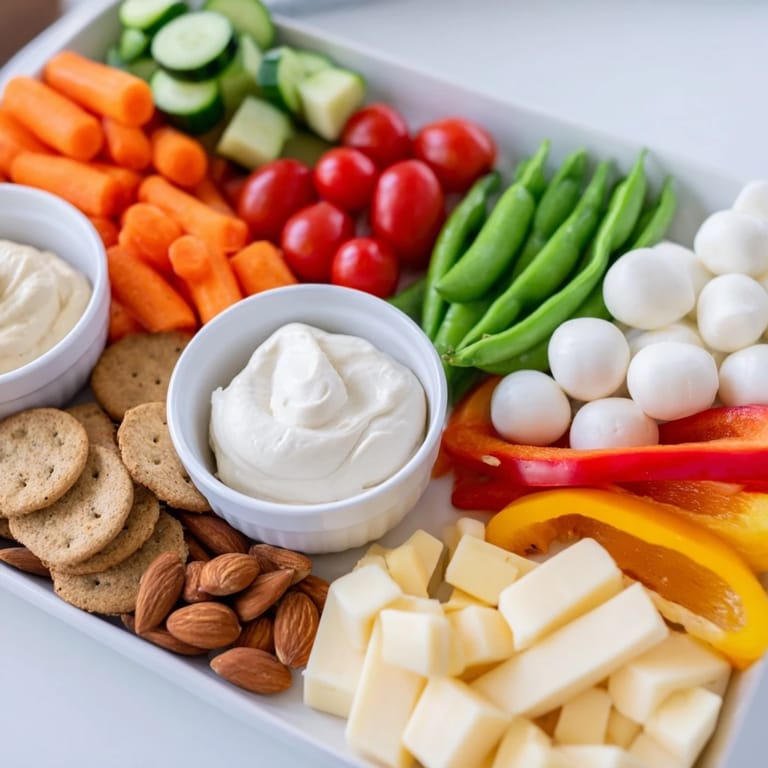
- Baby carrots: Use the smaller ones if you can find them; they're naturally sweeter and photograph better than the cut ones, which I learned the hard way.
- Cucumber slices: Pat them dry before arranging or they'll weep liquid onto your cheese—a small detail that keeps everything looking fresh.
- Cherry tomatoes: Pick ones that are still slightly firm; the softer ones roll everywhere and make you question your life choices.
- Bell pepper strips: The mixed colors do most of the visual work, so don't skip this—it's not just for looks.
- Sugar snap peas: People eat these first because they're fun and satisfying, so don't skimp on quantity if you want them to actually make it through lunch.
- Hummus: A good hummus is creamy enough that it doubles as a dip for crackers too; this one ingredient pulls a lot of weight.
- Ranch dressing or Greek yogurt dip: Greek yogurt mixed with ranch seasoning is lighter and keeps better than store-bought, plus it tastes fresher the next day.
- Cheddar cheese, cubed: The sharper the better; it stands out against everything else and doesn't get lost on the board.
- Mozzarella balls: These little pops of mild creaminess balance the intensity of other elements—they're worth seeking out.
- Gouda or Swiss cheese, sliced: Slice these yourself from the block if possible; the pre-packaged stuff dries out faster and tastes a bit thin.
- Whole grain crackers: Pick ones with visible seeds and texture; they taste better and look more intentional than basic saltines.
- Roasted nuts: A mix keeps things interesting; I usually go for almonds, cashews, and walnuts because they offer different textures and flavors.
- Olives: Both green and black if you're feeling generous, though honestly any will do—they add a briny moment to the eating experience.
- Dried fruit: The sweet-tart contrast is what makes people keep coming back to the board; don't skip this.
Tired of Takeout? 🥡
Get 10 meals you can make faster than delivery arrives. Seriously.
One email. No spam. Unsubscribe anytime.
Instructions
- Wash and prep your vegetables:
- Rinse everything under cool water and pat completely dry with a clean kitchen towel—moisture is the enemy of a fresh-looking board. Slice your cucumbers and peppers while they're still cool from the fridge, and feel free to cut them into fun shapes; people respond to presentation even when they don't know why it matters to them.
- Map out your board like you're designing something:
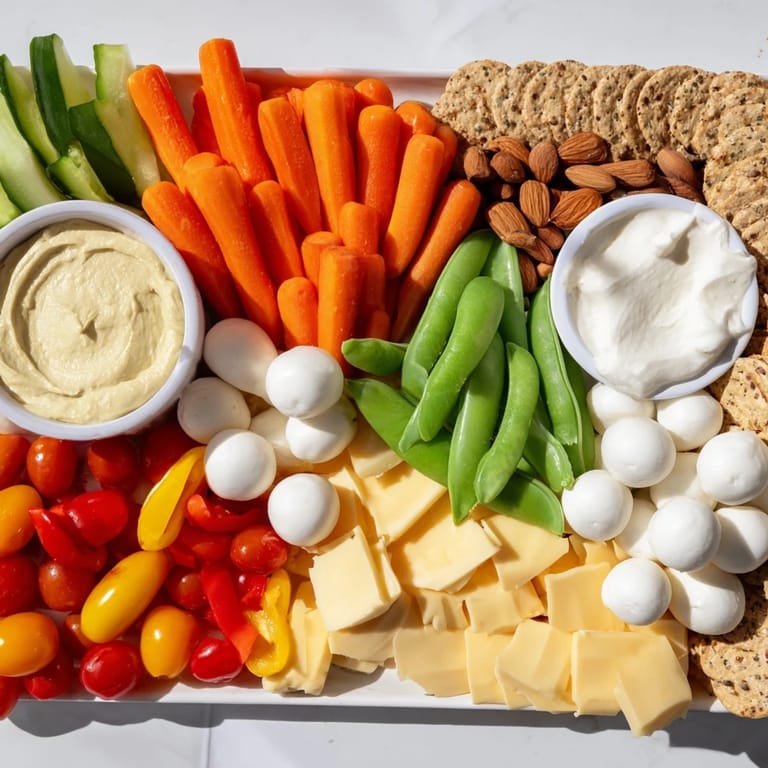
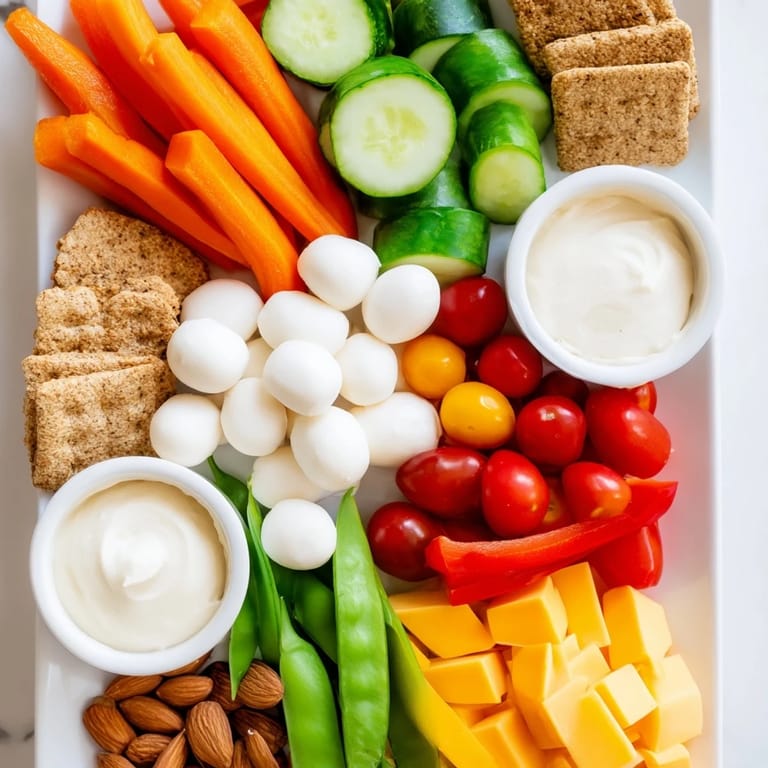
- Start by arranging vegetables in loose sections, leaving pockets of empty space that you'll fill later. Think of it as setting a stage rather than packing a box—the breathing room is what makes it feel generous, not cramped.
- Settle your dips into their little bowls:
- Position these bowls where they're easy to reach but won't tip over when someone's reaching past them; I usually tuck them toward the back or corners. This small detail prevents the chaos of dip pooling into the vegetable section, which ruins everything.
- Cluster your cheeses strategically:
- Group different cheeses near each other so their flavors and textures create little flavor moments as you eat. Keep them slightly separated from the dips so they don't absorb moisture and get weird.
- Fill the gaps with crackers nuts olives and dried fruit:
- This is where your board transforms from functional to beautiful—scatter these elements naturally, like you're not trying too hard. The irregular placement looks more inviting than perfect rows.
- Serve right away or chill it:
- Fresh is ideal, but you can cover it loosely with plastic wrap and refrigerate for a few hours if you're planning ahead. Just pull it out about fifteen minutes before serving so the cheese softens back to its best texture.
 Save to Pinterest
 My friend Marcus once said this board reminded him of traveling through Italy—picking up different cheeses and cured vegetables at markets, then eating them however felt right. That's the moment I realized these boards tap into something deeper than convenience; they feel like freedom and possibility all on one platter.
Why This Works as Lunch
There's something about a board that makes eating feel less transactional and more like an experience. You're not just fueling your body; you're creating a moment where different elements come together, and you get to decide how. The variety means there's something for every craving, and the fact that nothing requires cooking means you can actually be present with whoever you're eating with instead of hidden in the kitchen.
The Art of Customization
The beauty of this approach is that you can build it around whatever you have on hand. Some days I add hard-boiled eggs and sliced prosciutto for protein; other times I go full vegetarian with extra nuts and seeds. I've learned that the version you create based on your mood and what's in your fridge often tastes better than the one you planned, because it feels genuine rather than forced.
Making It Your Own
The real magic happens when you stop thinking about rules and start thinking about textures and flavors you actually want to eat. A board is a conversation between you and your ingredients, not a performance piece for Instagram. Give yourself permission to skip what doesn't excite you and double down on what does.
- Add roasted chickpeas or candied nuts if you want more crunch and staying power.
- Include a tiny jar of good honey or hot sauce on the side for people who want to experiment.
- Swap dried fruit for fresh berries if you're making this in summer when they're at their peak.
 Save to Pinterest
 This is the kind of food that reminds you that eating well doesn't always mean cooking—sometimes it means paying attention to what's already good and arranging it with care. That's its own form of love.
Recipe FAQs
- → What fresh vegetables work best for this board?
Choose crisp, colorful veggies like carrots, cucumbers, cherry tomatoes, bell peppers, and sugar snap peas for texture and variety.
- → Can I substitute the cheeses?
Yes, feel free to use your preferred cheeses such as gouda, Swiss, or dairy-free alternatives for a vegan twist.
- → What dips pair well with the vegetables and cheeses?
Hummus and ranch dressing or Greek yogurt-based dips complement the flavors and add creaminess to the board.
- → How should I arrange the ingredients on the board?
Group vegetables in sections, place dips in small bowls, then add cheeses and crunchy elements for an eye-pleasing layout.
- → Are there any allergy considerations?
This board contains dairy and nuts; use gluten-free crackers and check for allergy-safe options if needed.