 Save to Pinterest
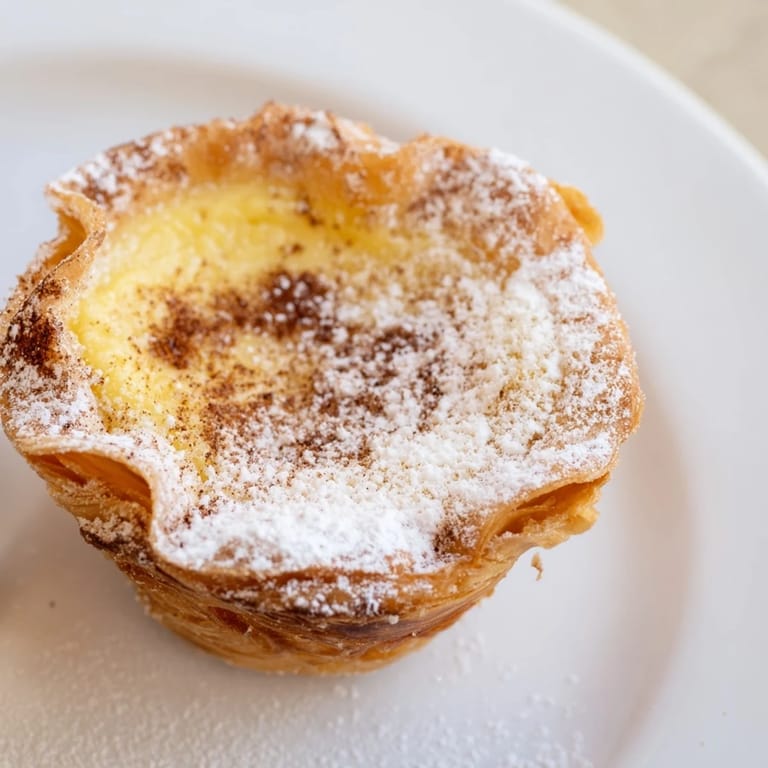
 My first encounter with Portuguese egg tarts happened at a small café in Lisbon, where I watched a baker pull a tray from the oven—the aroma of cinnamon and butter was intoxicating. Years later, I tried recreating them at home, and something about the contrast of that shattered phyllo shell against the silky custard made me understand why they're beloved across generations. The recipe isn't complicated, but it demands respect for timing and temperature. Now, whenever I make these, I'm transported back to that café, except the kitchen is mine and the tarts taste even better because someone I care about is about to enjoy them.
I made these tarts for my grandmother's birthday last spring, and she took one bite, closed her eyes, and smiled in a way I hadn't seen in months. She told me they reminded her of Portugal in the 1960s, of Sunday pastry runs and celebrations. That single moment—watching her taste something I'd made with my own hands that connected her to a memory—that's when desserts stopped being just desserts and became something meaningful.
Ingredients
- Phyllo pastry sheets (12 sheets): The soul of the tart—crispy, delicate, and forgiving if you work gently and keep unused sheets covered with a damp towel so they don't dry out.
- Unsalted butter, melted (60 g or 4 tbsp): Melted butter is the glue that holds everything together and creates those golden, shattering layers; brush each sheet evenly but don't oversaturate or they'll become greasy instead of crisp.
- Whole milk (250 ml or 1 cup): Whole milk adds richness that lower-fat versions can't match, but if you only have what's in your fridge, it will still work.
- Cornstarch (2 tbsp): This is what prevents your custard from breaking—it's your insurance policy against a grainy, separated filling.
- Heavy cream (125 ml or ½ cup): Don't skimp on this; it's what makes the custard luxurious and forgiving if your heat is slightly too high.
- Granulated sugar (100 g or ½ cup): The sweetness here is restrained so the egg and cinnamon flavors shine through instead of being buried under sugar.
- Egg yolks (4 large): Yolks only—no whites—because we want a silky, rich custard that coats the back of a spoon.
- Pure vanilla extract (1 tsp): Real vanilla makes a noticeable difference; don't use imitation if you can help it.
- Ground cinnamon (½ tsp in filling, 1 tsp for topping): Cinnamon is the signature spice here—warm, slightly sweet, and unmistakably Portuguese.
- Salt (pinch): A tiny pinch wakes up all the other flavors and keeps the custard from tasting one-note.
- Powdered sugar (2 tbsp for topping): This final dusting is both decoration and a subtle sweetness on the palate.
Tired of Takeout? 🥡
Get 10 meals you can make faster than delivery arrives. Seriously.
One email. No spam. Unsubscribe anytime.
Instructions
- Prepare your oven and phyllo:
- Heat your oven to 200°C (400°F) while you work with the phyllo—this pastry demands a hot oven to shatter properly. Lay out your sheets and cover the unused ones with a barely damp kitchen towel so they stay pliable instead of turning brittle and impossible to work with.
- Layer and butter the phyllo:
- Brush each phyllo sheet lightly with melted butter—think of it like painting, not drowning—then stack three sheets together. Cut the stacks into squares large enough to drape over the cups of your muffin tin, leaving some overhang so the pastry can settle and crisp up.
- Shape the cups:
- Gently press each stack of phyllo into a muffin cup, letting the corners stick up slightly; they'll fold down and become golden edges as they bake. Don't press too hard or the delicate dough will tear.
- Pre-bake the pastry shells:
- Bake these empty shells for 8 to 10 minutes until they're pale golden and feel papery to the touch. The phyllo should be set but not dark—you want room for color to develop when you add the custard.
- Make the custard:
- In a medium saucepan, whisk together the milk and cornstarch first until completely smooth, then add the cream, sugar, egg yolks, vanilla, cinnamon, and salt. The whisking is important—you're incorporating air and preventing lumps from forming later.
- Cook the custard slowly:
- Place the saucepan over medium heat and whisk constantly as the custard heats; after about 5 to 7 minutes it will thicken and coat the back of a spoon in a silky layer. The moment it reaches this point, pull it from the heat—overcooking turns custard into scrambled eggs.
- Fill the tarts:
- Pour the warm custard carefully into each phyllo cup, dividing it evenly so every tart gets the same amount of creamy filling. Work quickly so the custard stays warm and pourable.
- Bake until set:
- Return the tarts to the oven for another 8 to 10 minutes; the custard should jiggle just slightly in the center when you gently shake a tart—if it's completely solid, you've gone too far. The tops should be lightly golden, not brown.
- Cool and finish:
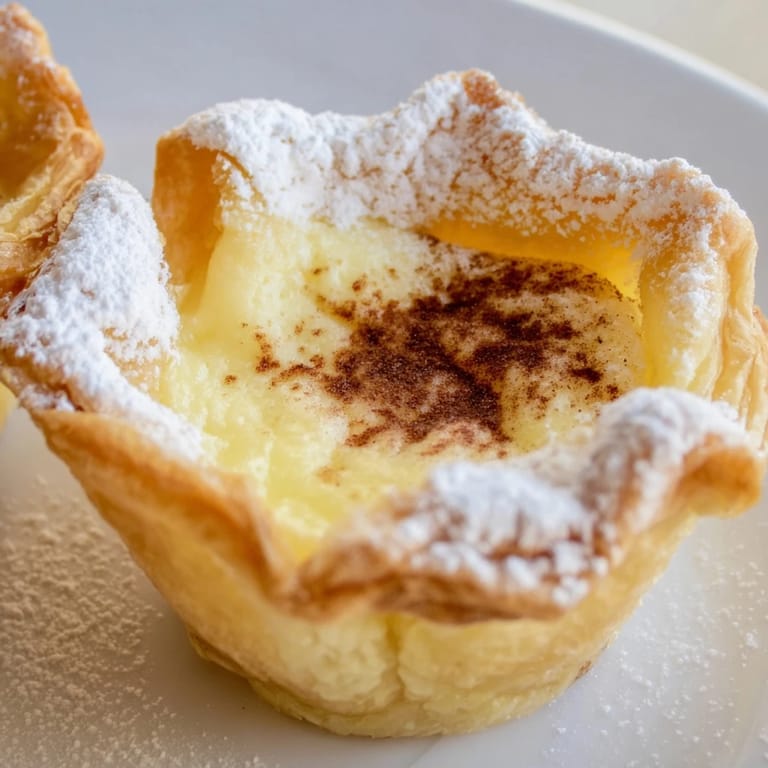
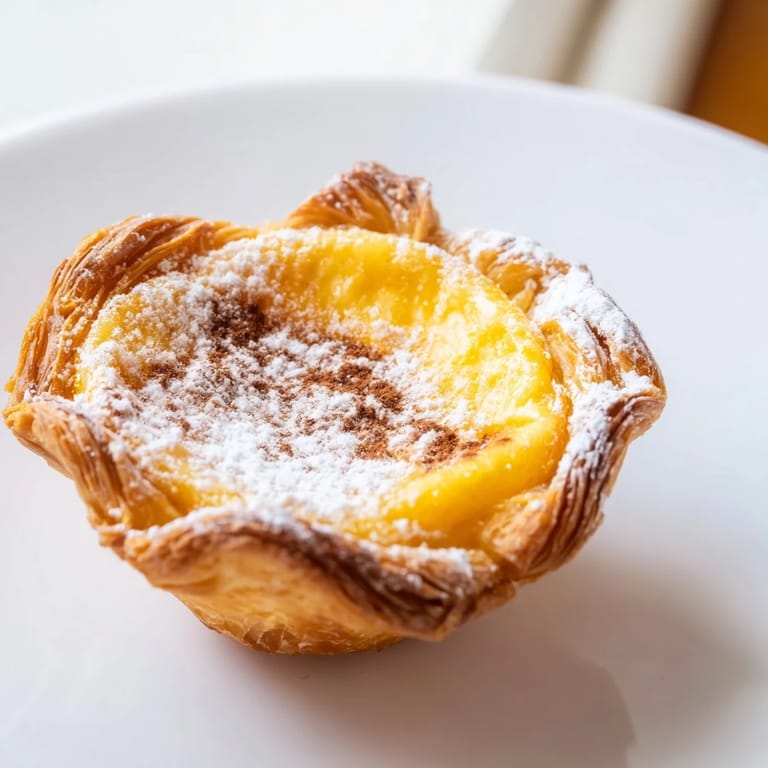
- Let the tarts rest in the tin for a few minutes so the custard sets completely, then dust each one generously with a mixture of cinnamon and powdered sugar. This final step is where the dish earns its elegance.
 Save to Pinterest
 The first time someone bit into one of these tarts without warning and their face went quiet with surprise, I understood that food is the most honest language we have. No words needed—just the pleasure of that shattering pastry and smooth custard speaking for itself.
The Phyllo Secret
Phyllo intimidates home cooks, but the truth is it's more forgiving than you'd think—it just demands honesty and speed. Every baker who's worked with phyllo has torn a sheet or three; the solution is to keep moving and trust that the butter will seal any small breaks. I learned this by making these tarts five times in a row until my hands stopped hesitating. Once you accept that a few tears are part of the process, phyllo becomes your friend instead of your enemy.
Timing and Temperature
The reason these tarts succeed is because of respect for heat and timing, not because of any magic ingredient. A too-cool oven produces soft phyllo instead of shattering pastry; too hot and the custard fills before it's properly set. I use an oven thermometer now because I learned the hard way that my oven runs about 15 degrees cooler than it claims, and that single fact changed every batch I made after that discovery.
Serving and Storing
These tarts are best eaten slightly warm, when the phyllo still crackles and the custard is creamy but not cold. If you need to store them, keep them in an airtight container in the fridge and give them a brief warm-up in a 160°C oven for a few minutes to restore the crisp texture. They're also stunning with a small spoonful of whipped cream on the side, a drizzle of honey, or simply with strong espresso and a quiet moment.
- Serve these within a few hours of baking if you want maximum crispness, though they're still delicious the next day.
- A glass of chilled white port or a strong cup of coffee is the perfect companion to cut through the richness.
- Make the custard and phyllo cups separately if you're planning ahead—both keep well overnight and can be assembled and baked fresh when guests arrive.
 Save to Pinterest
 These Portuguese egg tarts aren't just a recipe—they're a small portal to another kitchen, another time, another conversation. Make them generously and watch what happens when people taste something made by hand and memory rather than convenience.
Recipe FAQs
- → What type of pastry is used?
Thin, flaky phyllo pastry sheets are layered and baked to create delicate cups that crisp beautifully.
- → How is the custard thickened?
Cornstarch is whisked into milk before adding cream, egg yolks, and sugar, then cooked gently until thickened.
- → Can these be made ahead of time?
Yes, prepare and cool fully, then store chilled. Reheat briefly in the oven to restore crispness before serving.
- → What spices enhance the filling?
Ground cinnamon is incorporated into the custard and sprinkled on top, adding warm, aromatic notes.
- → Are there suggested beverage pairings?
A chilled white port or a strong espresso complements the rich, sweet flavors nicely.
- → How many tarts does the recipe yield?
This preparation yields 12 delicate phyllo cups filled with smooth custard.