 Save to Pinterest
 Last summer, my neighbor brought over a plate of grilled vegetables that made me stop mid-conversation—not because they looked fancy, but because they tasted alive. The char, the freshness, the way that green sauce clung to every piece. I realized I'd been overthinking vegetable cookery when the answer was this simple: good heat, good produce, and something bright to tie it together. That afternoon taught me that the best meals often come from the least complicated methods.
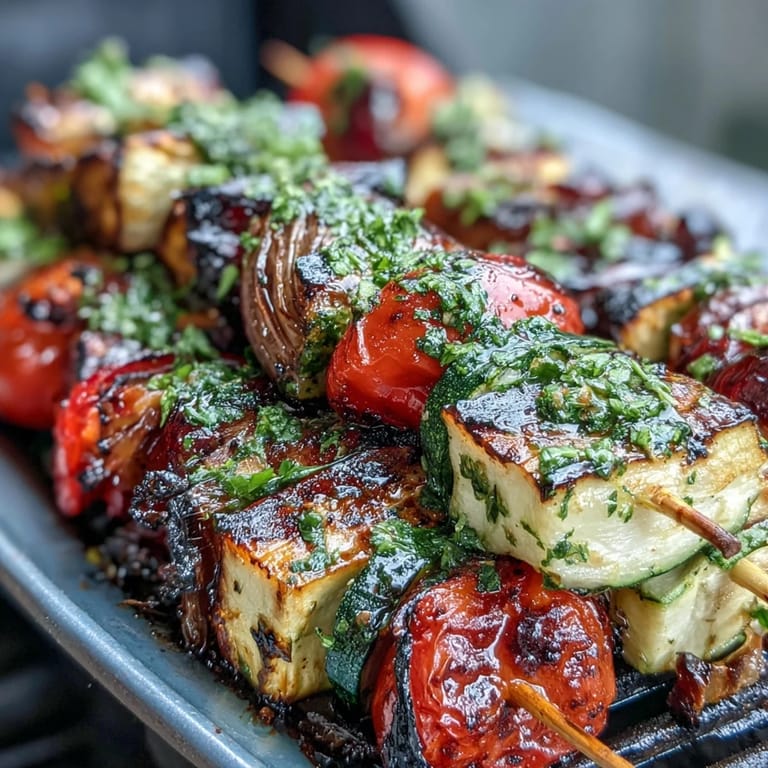
I made these for a backyard dinner where someone had just announced they were going vegetarian, and there was this awkward quiet at the table. Then these skewers came off the grill, steaming and speckled with char, and suddenly everyone was reaching for seconds. That night, nobody talked about what was missing from the plate—they talked about what was there, how good it tasted, how the flavors worked together. It was one of those small cooking moments that reminded me food brings people together in unexpected ways.
Ingredients
- Red bell pepper: The sweetness balances beautifully with the herbiness of the sauce, and the color makes the skewer look alive.
- Yellow bell pepper: Different from red in flavor—slightly more citrusy—and adds visual rhythm to your skewers.
- Zucchini: Slice it thin enough to cook through quickly, or it'll stay watery inside while the outside burns.
- Red onion: Cut into wedges so the layers hold together on the skewer, and the natural sugars caramelize beautifully.
- Button mushrooms: These are forgiving on the grill and soak up the char like little sponges—halve the larger ones so they cook evenly.
- Eggplant: Salt your cubes 15 minutes before skewering to draw out moisture, or they'll steam instead of char.
- Cherry tomatoes: They burst slightly under heat, releasing their juice back onto the other vegetables—pure magic.
- Olive oil for cooking: Regular olive oil, not extra-virgin, so it won't smoke on the grill.
- Kosher salt and black pepper: The foundation that lets every vegetable taste like itself, just amplified.
- Fresh parsley: The backbone of good chimichurri—use it generously and rough-chop rather than mince for better texture.
- Fresh cilantro: Adds brightness and a slightly peppery edge that cuts through the richness of the oil.
- Garlic: Mince it fine so it distributes evenly, and don't skip this—it's what makes the sauce taste intentional.
- Red wine vinegar: The acid that wakes everything up and keeps the sauce from tasting one-dimensional.
- Extra-virgin olive oil for sauce: This is where quality matters—use the good stuff here, not on the grill.
- Dried oregano: A teaspoon feels small, but it carries so much flavor—crush it between your fingers before adding to release the oils.
- Red pepper flakes: Optional but recommended—even a small amount adds a whisper of heat that lingers.
Tired of Takeout? 🥡
Get 10 meals you can make faster than delivery arrives. Seriously.
One email. No spam. Unsubscribe anytime.
Instructions
- Soak your skewers if wooden:
- At least 30 minutes in cold water—this prevents them from catching fire on the grill and turning your beautiful vegetables into kindling.
- Heat the grill to medium-high:
- You want about 400°F, hot enough that you can only hold your hand above it for a few seconds before pulling away.
- Coat the vegetables:
- In a large bowl, toss your cut vegetables with olive oil, salt, and pepper until everything glistens—this is the seasoning that matters most.
- Thread them thoughtfully:
- Alternate your vegetables so colors mix and different textures cook at similar rates; a pattern of pepper, onion, zucchini, mushroom creates both visual interest and balanced cooking.
- Grill with patience:
- Place skewers on the grill and resist the urge to move them constantly—let them sit for 3 to 4 minutes before turning so they develop that char you're after. Rotate them about every 3 to 4 minutes, total time 12 to 15 minutes, until vegetables are tender when pierced with a fork and spotted with dark, caramelized edges.
- Build the chimichurri while they cook:
- In a bowl, combine parsley, cilantro, minced garlic, red wine vinegar, oregano, red pepper flakes if using, salt, and pepper. Whisk gently, then slowly pour in the extra-virgin olive oil while stirring—the emulsion will thicken slightly and turn a gorgeous green-brown.
- Finish and serve:
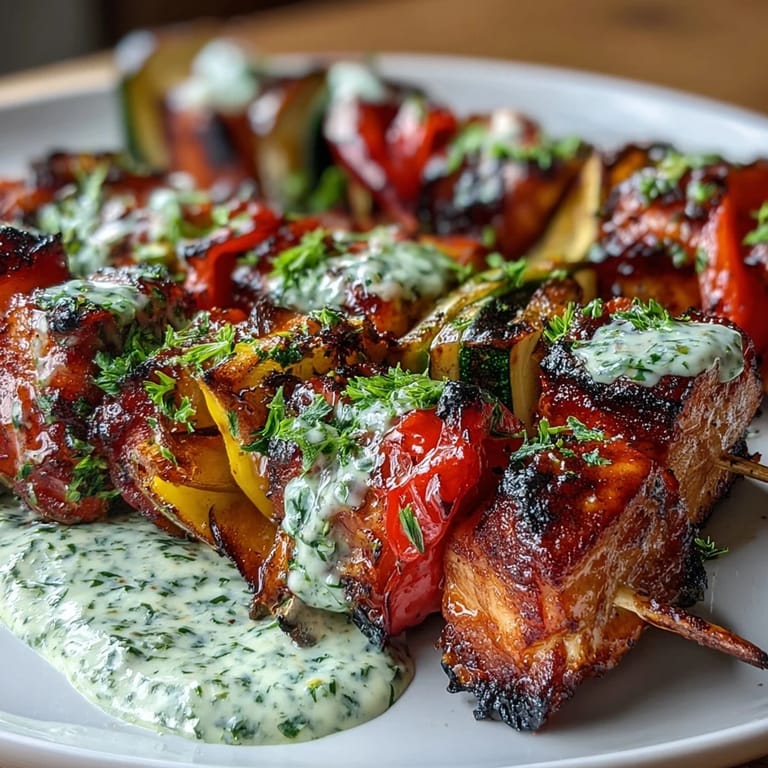
- When the skewers are done, arrange them on a platter and drizzle generously with chimichurri—don't be shy, this is where the magic happens—and serve the rest on the side for people to add more.
 Save to Pinterest
 One evening, a friend who usually orders takeout because cooking intimidates her asked if she could help make these. I handed her a knife and a pile of vegetables, and something shifted in the room—there was no pressure, just two people prepping food together with music playing. When we pulled those skewers off the grill and she tasted the chimichurri, her whole face changed. She made them again the next week, alone this time, and texted me a photo. Sometimes the best recipe isn't just about the food; it's about making someone feel like they can cook.
The Grill Game
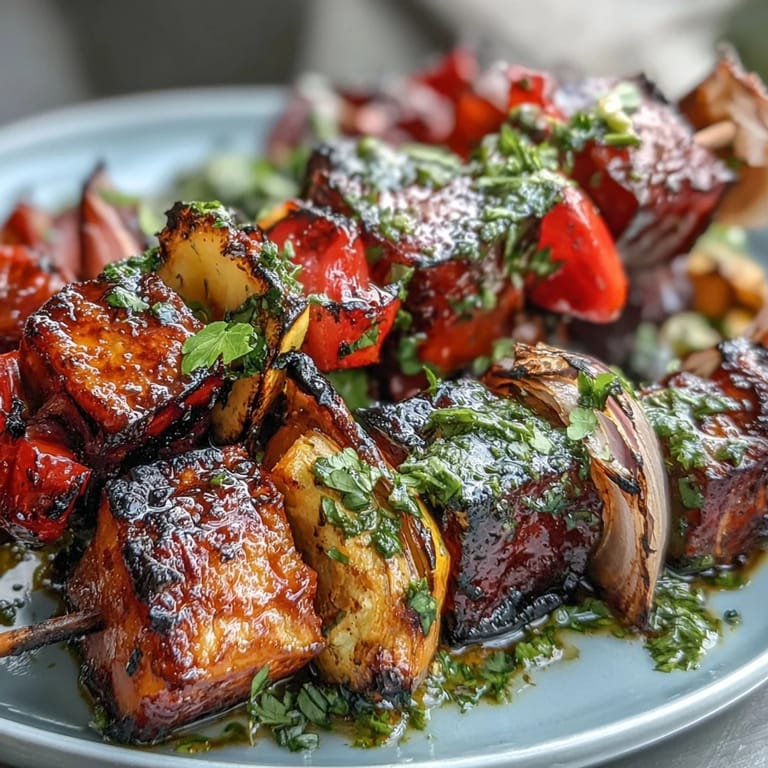
Grilling vegetables is different from grilling meat—you're not fighting for doneness or worrying about food safety. What you're doing is coaxing sweetness out of something and letting the grill add depth. The char isn't a mistake; it's the entire point. Every time you turn those skewers, you're creating more surface area for heat to kiss, and that's where the flavor lives.
Chimichurri as a Condiment Philosophy
Chimichurri started as a way to preserve herbs and oil, and it's stuck around because it works on almost everything. The beauty of this sauce is its flexibility—it tastes good on grilled vegetables, sure, but also on crusty bread, over rice, stirred into soups, or spooned onto roasted chicken. Once you understand the formula (fresh herbs, acid, garlic, oil), you can adjust it based on what's in your garden or what you're in the mood for. I've made it with basil instead of parsley on summer mornings when parsley wasn't available, and it was different but equally good.
Beyond the Recipe
These skewers work as a main course or a side, depending on your mood and your guests. Serve them over rice to make it heartier, alongside crusty bread to soak up the chimichurri, or on their own as a light dinner. They're also excellent at room temperature, which means you can make them ahead and let people graze. A chilled white wine like Sauvignon Blanc cuts through the richness beautifully, or even a sparkling water with lemon feels celebratory.
- If you want protein, thread cubes of halloumi cheese onto the skewers—it won't melt completely and adds a salty, squeaky contrast.
- Marinated tofu cubes work too and absorb the grill's smokiness in a way that impresses even people skeptical about tofu.
- Whatever vegetables you choose, cut them roughly the same size so they finish cooking at the same time.
 Save to Pinterest
 These skewers remind me why I love cooking outdoors—there's something about fire and fresh vegetables and sauce that tastes like summer itself. Make them once and they'll become part of your rotation.
Recipe FAQs
- → What vegetables work best for grilling on skewers?
- → How do I prevent skewers from burning on the grill?
- → What makes chimichurri sauce flavorful for grilled veggies?
- → How long should vegetables grill to get a perfect char?
- → Can I add protein to this grilled veggie dish?